


COLLECTABLE STORIES: WHERE BLUE MEETS RED

WHERE BLUE MEETS RED
Short Talk with Tamás Patrovics (Director)
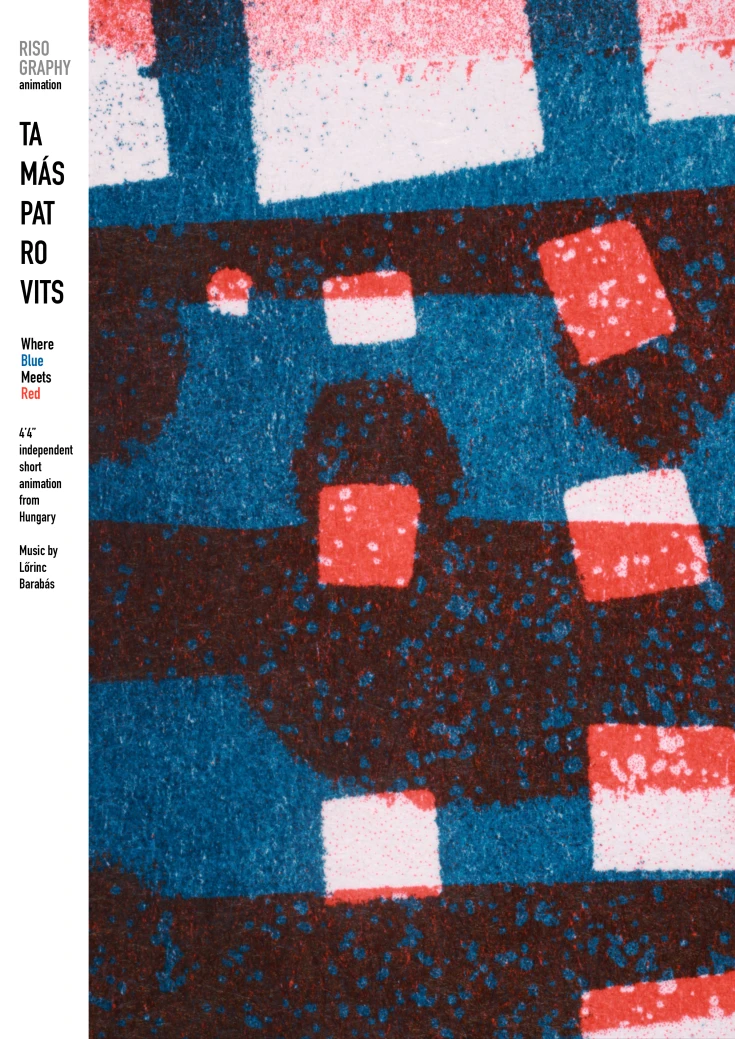
BEST SHORT STUDENT DOCUMETNARY FILM Category
22nd IN THE PALACE International Short Film Festival 2025
Hungary, Experimental, 00:04:01, 2024
Synopsis: The film consisting of countless original risograph prints, is an under-the-camera, straight-ahead animation improvised to the rhythm of the scores of Hungarian Barabás Lőrinc jazz trumpeter. This animation, as a consistent conceptual work, avoids any sorts of post-digital manipulation, and solely consists a series of prints captured under the camera.
Biography: Animated film director, graphic artist, and art teacher. He finished his studies at the Hungarian University of Arts and Design in 1994, at the faculty of animation and video. Since 1995, he teaches animation and creative design thinking. He founded the Primanima World Festival of First Animations in 2012 and ever since he is the creative director of the event. He is founder and director of Budaörs Animation and Creative Space – BABtér, which is a unique art and education studio with numerous animation and graphics equipment.
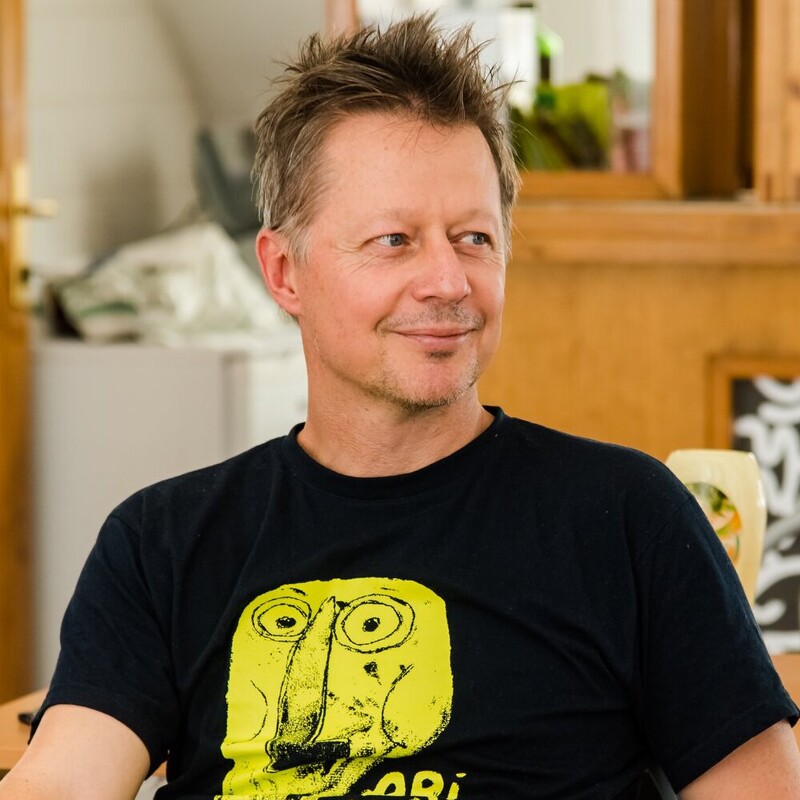 Tamás Patrovics, director
Raya Hristova: Can you tell me how the music and the visuals complement each other?
Tamás Patrovics: Well, first of all, I had a clear artistic concept. I come from an animation background, I’m also the director of an animation festival in Hungary. Last summer, I had about three months to work on some experimental animation, and I wanted to try out how the risograph printing technique could work in animation or film. Since the film is structured like a music video or clip, finding the right music was essential. In Hungary, we have very good jazz musicians, not that well known abroad, but I knew one personally: Barabás Lőrinc, a trumpeter. We had worked together before, so I asked him for a piece that could work well for animation, something with musical development across the track.
Raya Hristova: You mentioned using risograph printing technique. Was this your first time working with it, or do you have previous experience with experimental processes?
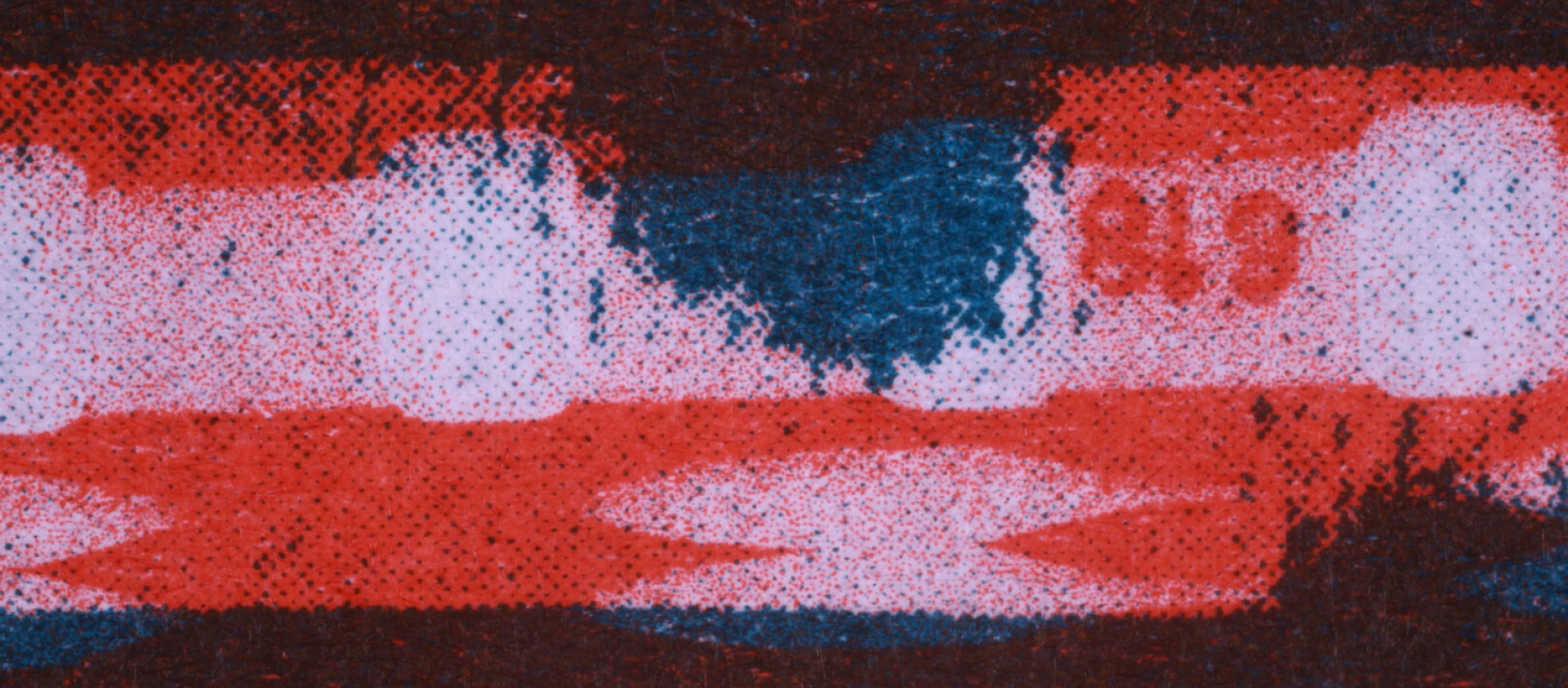
Tamás Patrovics: In fine art, yes, I had some experience. I also own a small print house, where I have traditional engraving machines, linocut and woodcut presses. I don’t know how many people in the audience are familiar with risography, but it’s a relatively modern, contemporary printing technique from Japan. It uses very vibrant, separate colorsm somewhat like woodcut printing. I decided to use just two colors, blue and red, because they’re opposites. Blue also carries certain connotations in jazz music. That was part of the concept.
Raya Hristova: Why blue and red, and not something more classic like black and white, which are also opposites?
Tamás Patrovics: Maybe next time. But seriously, I wanted to explore what happens when these two specific colors meet.
Raya Hristova: So in the title Where Blue Meets Red, is there a deeper meaning behind these colors crossing each other?
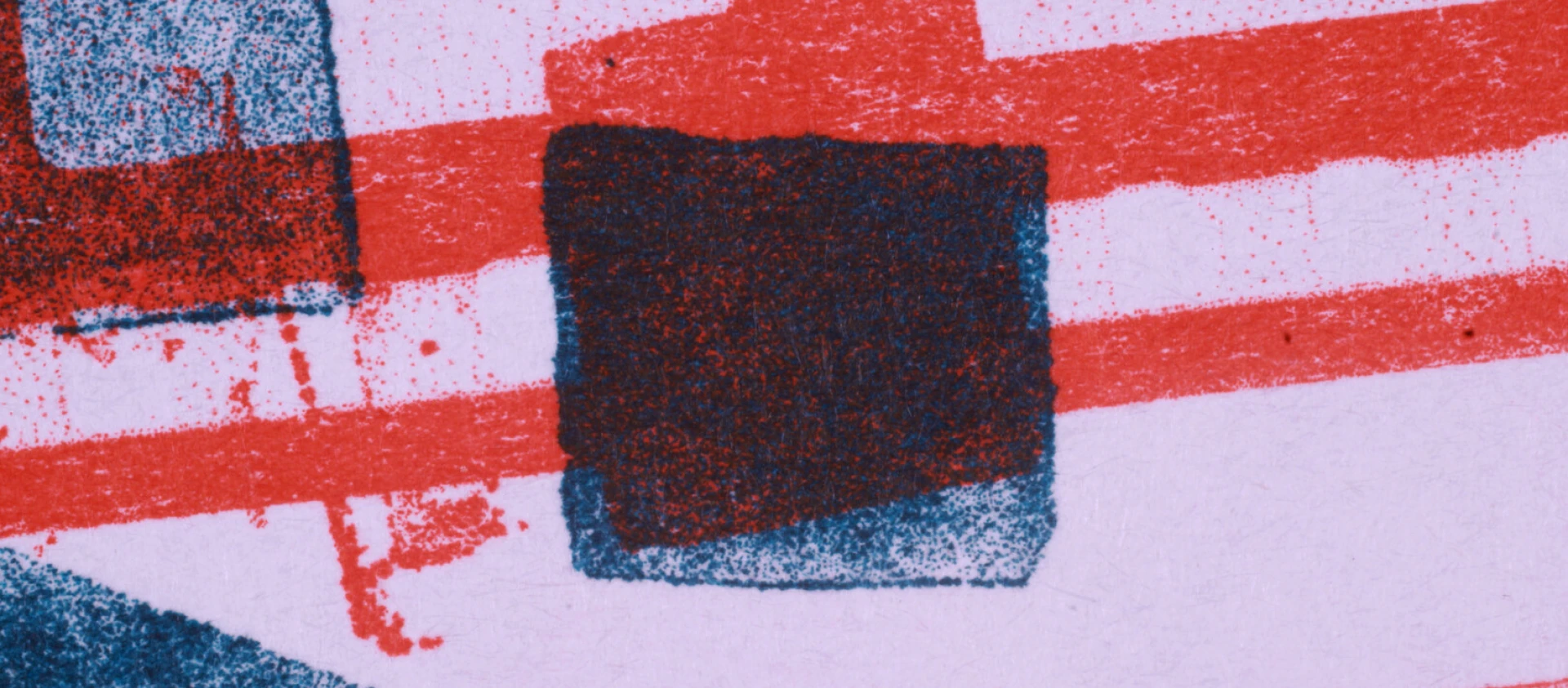
Tamás Patrovics: Well, I think the process behind the film might explain it better. I used old wooden stamps, very simple, almost childlike tools. I modified their surfaces and created very basic forms. I made around 15 black-and-white artworks just by stamping like in a post office: ping-ping-ping. Then I fed these into the risograph machine separately, experimenting with the layering and pressure of colors. In the end, I created about 150 risograph prints. I shot them using a macro lens to capture the tiny details—the ink points, the textures. That was a crucial part of the concept. I didn’t want to use any digital effects afterward. It’s an entirely analog, under-the-camera animation, no digital manipulation at all.
Raya Hristova: That sounds like a really intense process. Did it all come together smoothly from the beginning, or were there challenges?
Tamás Patrovics: It actually flowed really well. It’s like keeping a certain vibration, you hear the music and you just follow that rhythm. Even though we shot it with a digital camera, I could see the results instantly. Unlike in the old days with 35mm, where you had to wait to see what you got. Here, I could follow the visual and musical flow in real time. I didn’t edit anything afterward, I just followed the score from beginning to end.
Interviewer: Raya Hristova
Editor: Martin Kudlac
Raya Hristova’s Take
The short film Where Blue Meets Red by Hungarian animator Tamás Patrovics invites viewers into an experience that is equal parts visual rhythm and auditory meditation. Rooted in a deep respect for analog processes and guided by a jazz-infused score, the film is a hypnotic dialogue between color, sound, and texture.
At first glance, Where Blue Meets Red seems like an abstract experiment, and in many ways, it is, but what elevates it is Patrovics' uncompromising artistic vision. With a background in fine art and experimental animation, he fuses the precision of traditional craft with the spontaneity of jazz, bringing a handmade quality to every frame. The entire animation was created using risograph printing, a contemporary Japanese technique known for its vibrant, layered colors. Patrovics restricts himself to just two: red and blue, opposites not only in pigment, but in emotion, energy, and cultural symbolism.
These colors don’t just coexist. They collide, blend, resist, and eventually embrace one another. Through a macro lens, we witness every ink blot and imperfect layer, each frame stamped, printed, and assembled by hand. The analog imperfections, the bleed of color, the grain of ink on paper, aren’t polished out. They’re the point. This is animation as physical labor, where process and material become part of the story.
Ultimately, the film explores the tension and harmony between opposites: blue and red, analog and digital, control and improvisation. But it also poses a subtle, deeper question: in a world dominated by digital perfection, what does it mean to create something slow, physical, and imperfect by design?
Where Blue Meets Red is not only a love letter to process but a rare reminder that animation can be both modern and handmade, musical and meditative. It’s a film that doesn’t shout, it hums, it pulses, it breathes. And in doing so, it stays with you long after the last frame fades.


