


COLLECTABLE STORIES: THE KITCHEN

THE KITCHEN
A Short Talk with Valer Futej (director), Zuzana Nevolova (screenplay), Adéla Růžičková (producer)
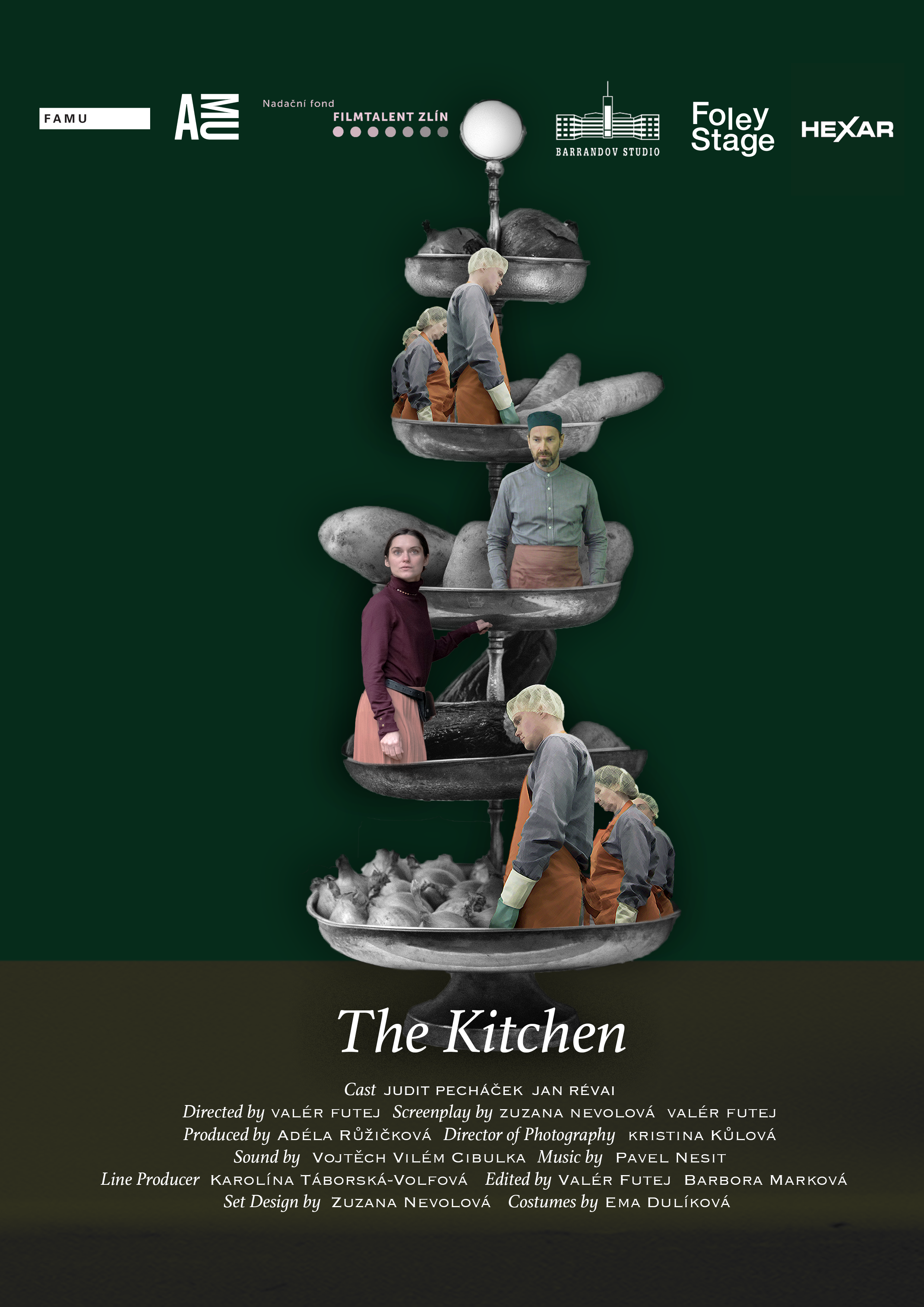
BEST STUDENT FICTION
22nd IN THE PALACE International Short Film Festival 2025
Czech Republic, Czech, 00:13:11, 2024
Synopsis: The static environment of the kitchen is disrupted by the arrival of a young woman—a new cook—who tries to adapt to the strictly defined working conditions and settle into the established routine. By the time she realizes the system is exerting overwhelming pressure on her, it is too late to break free from the mechanism she has become a part of.
Biography: Valér Futej is a Slovak director and editor studying at FAMU in Prague. He made several short films awarded at local film festivals. In his works he focuses on a distinctive stylization of narrative, location, acting and directing. He's passionate about diversity and marginalised stories - through fictional, highly-stylized narratives, he sets up a mirror of young individuals trying to fit into today's modern society.
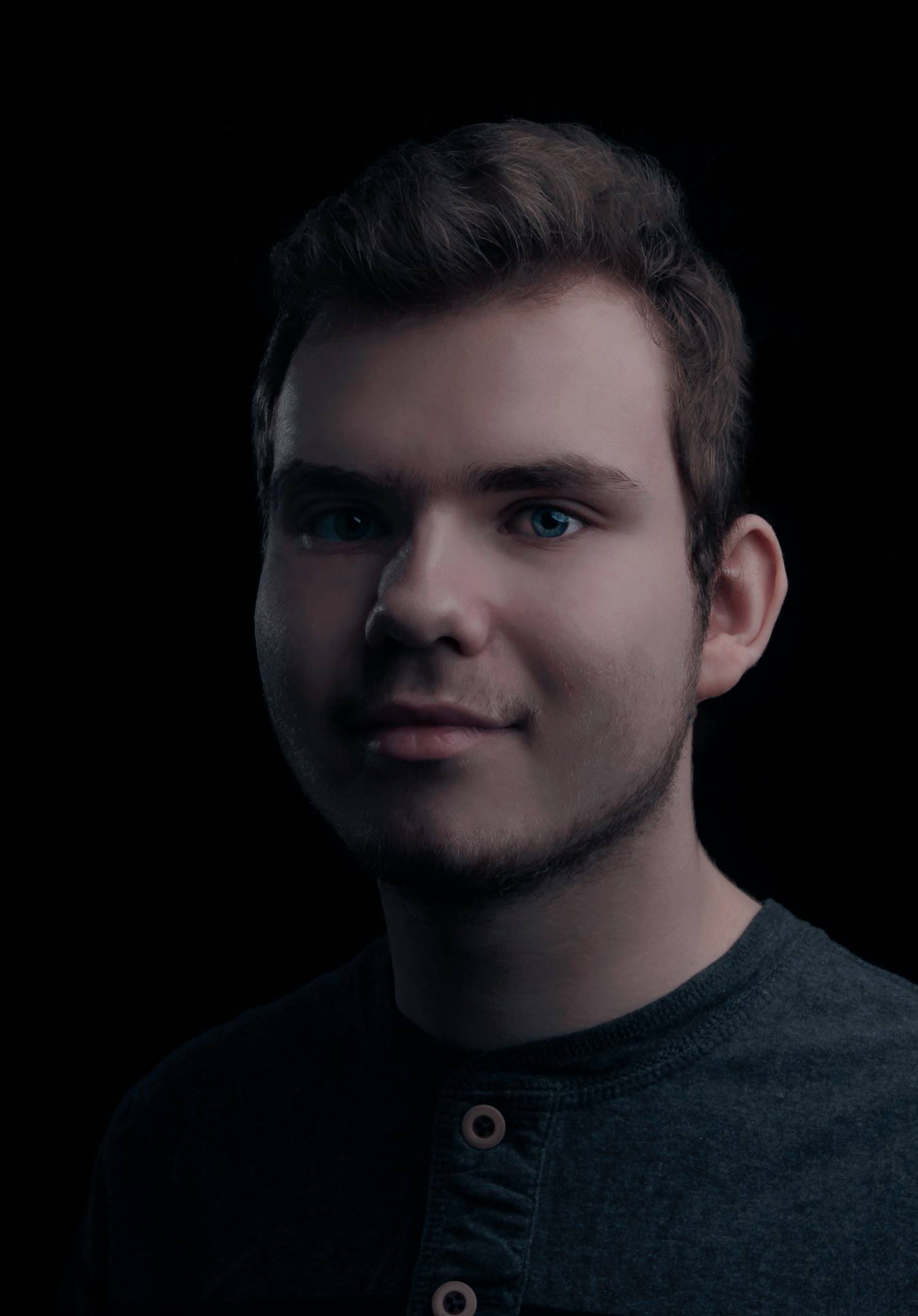 Valér Futej, director
Evgenia Evtimova: Your film feels very sterile, mechanical, and precise. Was this style intended as a metaphor, or did it naturally develop and lead to various interpretations?
Zuzana Nevolova: The stylization is definitely very strict, and it comes from the core of our topic. We discussed having a mechanical style very early on during the synopsis development, Valer wrote it in first, and I developed it further in the script. Valer was very careful as a director to maintain that strictness, especially in how the actors moved and the choreography of their gestures.
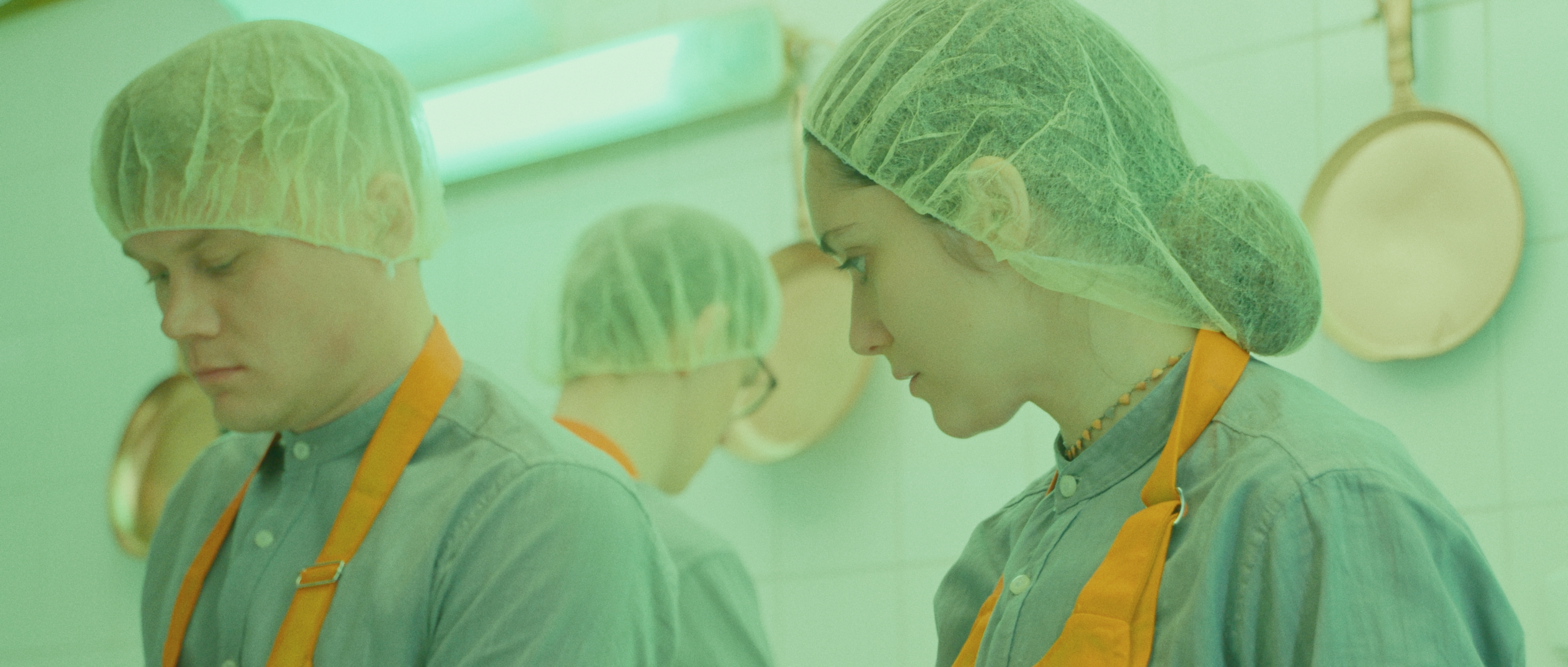
Valer Futej: For me, the film is a short allegory about replaceability, how people can be disposable in society. Together with our director of photography, we created this language of strict lines and toxic-like colors to represent the rigid social hierarchy. It’s meant to highlight how the main character doesn’t fit in.
Evgenia Evtimova: Your film has a very strong directorial vision and stylistic coherence. From a writing standpoint, the dialogue is minimal. What filled the pages of the script?
Nevolova: What really attracted me when Valer came with his idea was the rhythmic style of the script. I focused on maintaining that rhythm, and the dialogue actually came only three days before shooting. The actors learned quickly. Most of the script focused on describing the set and ensuring everything stayed coherent throughout.
Evgenia Evtimova: From a producer’s perspective, this is quite a unique film to make. Adéla, what was the biggest challenge, and what are you most proud of?
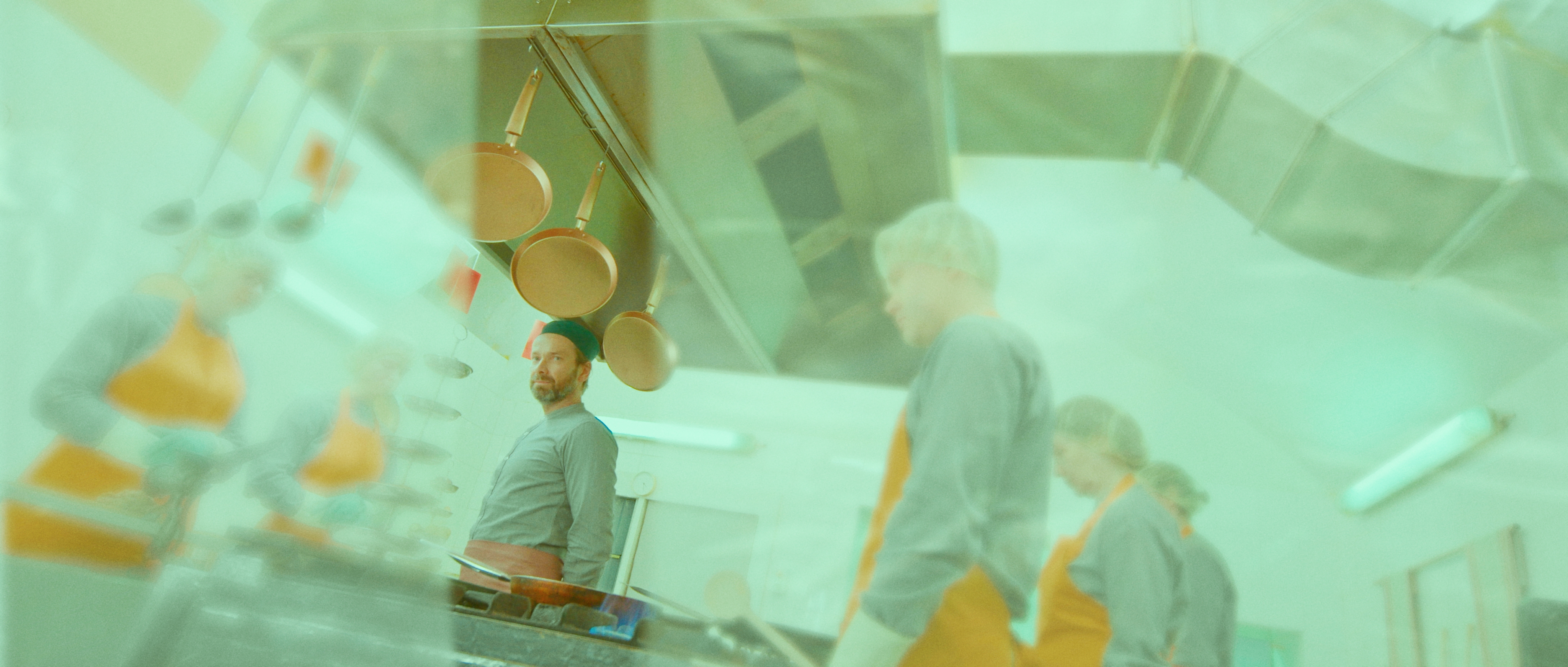
Adéla Růžičková: The biggest challenge was definitely finding the right location. The film is set in one place, the kitchen and the surrounding hallways, but we ended up shooting in six different locations. You wouldn’t notice this in the final film.
Interviewer: Evgenia Evtimova
Editor: Martic Kudlac
Evgenia Evtimova’s Take
Premiering with quiet force, The Kitchen is a clinical and near-wordless short that doubles as a minimalist allegory on conformity, replaceability, and the struggle to retain individuality in a hyper-regulated world. Director Valer Futej constructs the titular kitchen not just as a setting, but as a closed system, a precise mechanism from which deviation is both noticed and punished.
The film’s strength lies in its unwavering formal control. Working closely with cinematographer and production designer, Futej implements a visual language of strict lines, sharp right angles, and toxic-toned color grading, pale greens, whites, and steely blues, to enforce a mood of sterility and emotional detachment. Wide static shots, deliberately repetitive blocking, and subtly exaggerated foley build the kitchen into a near-sentient machine. The oppressive sound design, composed of screeching metal, clattering utensils, and rhythmic slicing, evokes a space of constant surveillance, hyper-aware, almost militant in its efficiency.
This sensory environment is disrupted by the arrival of a new cook, a young woman whose tentative gestures and late glances place her immediately out of rhythm with the established flow. There is no explicit resistance, rather, her inability to assimilate leads to her becoming absorbed, silently, into the machinery. As the director notes, the film is an allegory of disposability, a meditation on systems that absorb and discard.
While the film contains only a handful of spoken words, the script by Zuzana Nevolova is not empty. Instead, it prioritizes rhythm, gesture, and pattern. The script itself, developed early from a concept by Futej, relied more on beat, action, and architectural mapping than dialogue. According to Nevolova, the actual words of the script were finalized just three days before the shoot. In this sense, The Kitchen is a physical script: a blueprint of motion and space rather than traditional dialogue and plot.
The choreography of the actors further deepens this structure. Movements are synchronized and repetitive, with characters engaging in rituals of cleanliness and preparation, devoid of warmth or variation. This mechanical performance amplifies the core metaphor: a society where individuals must mold themselves to fit the structure, rather than the other way around.
From a production standpoint, the film’s most striking achievement is how seamlessly it conjures a singular location, despite having been shot across six different kitchens and hallways. Producer Adela Ruzickova notes that finding and adapting these spaces to feel like a single, cohesive environment was the central logistical challenge, and ultimately one of the most satisfying accomplishments. The illusion is so complete that the space feels not only unified, but personified, a character as much as a backdrop.
In the end, The Kitchen is a rigorous, stylized film that resists overstatement while inviting interpretation. Its economy of dialogue is matched by an excess of control. Its narrative, though minimal, echoes with universal anxieties about systematization, uniformity, and the quiet violence of exclusion. It’s a visually and sonically precise work that demonstrates the power of formal cinema to express interior and societal tension without needing to say much at all.


