


COLLECTABLE STORIES: THE HUMAN VOICE

THE HUMAN VOICE
Short Talk with Iphigenie Worbes (Director) and Andreas Schröder (Director)
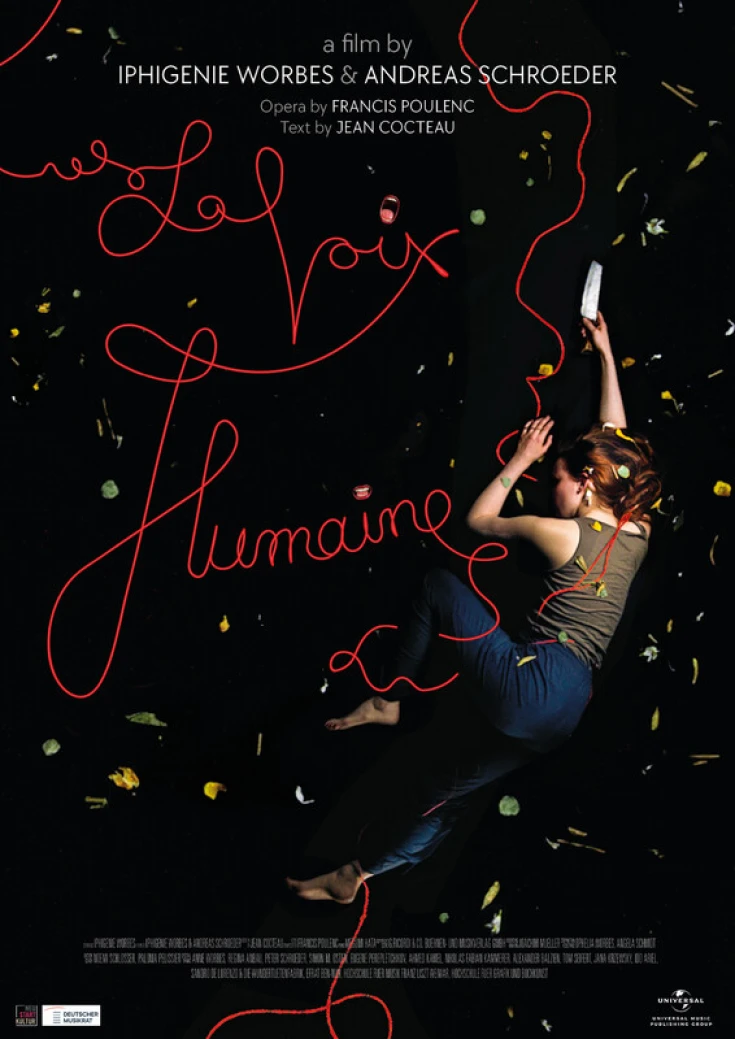
BEST MID-LENGHT FILM Category
22nd IN THE PALACE International Short Film Festival 2025
Germany, Fiction, French, 00:46:41, 2024
Synopsis: "The Human Voice" is an opera film based on Francis Poulenc’s mono-opera. After a breakup, Elle anxiously awaits a call from her ex. When the phone finally rings, their fragmented conversation unfolds through surreal imagery and shifting music. Her ex’s words remain unheard, suggested only through her reactions. The phone becomes both a lifeline and a gallows rope, blurring the line between hope and despair as Elle spirals through the pain of separation.
Biography: Iphigenie Worbes is a versatile, award-winning artist from Germany. Prior to her Opera Studies (M.Mus.) at the Jerusalem Academy of Music & Dance, she studied Fine Arts at the Bezalel Academy (Israel) and Acting at The Lee Strasberg Theater & Film Institute, New York.
Andreas Schröder is an interdisciplinary visual artist from Germany. He studied Photography and Moving Images at the Academy of Fine Arts Leipzig. The Human Voice is their first artistic cooperation, fusing opera and visual art.
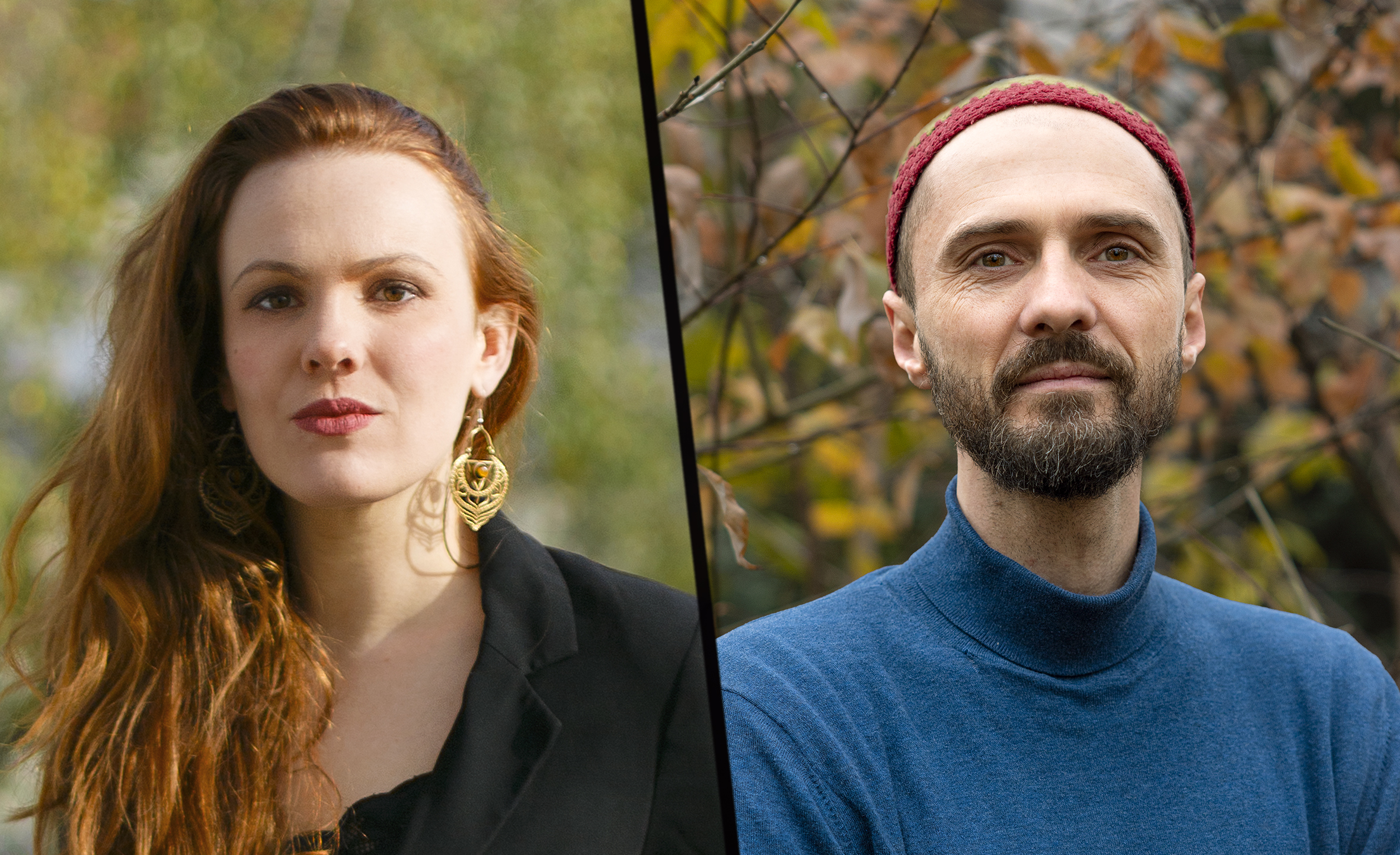 Iphigenie Worbes, Andreas Schröder, directors
Petar Penev: Why did you decide to tell a story of alienation using opera?
Iphigenie Worbes: It’s actually an opera that already exists, so it wasn’t our decision to create one from scratch. It’s based on a play by Jean Cocteau, and he wanted to create something very different from the big theatrical plays and grand opera. He was curious what would happen if we took all those grand means and used them to tell the most minimal story: just one woman, one phone call, all in a very small setting. And that also tied into the invention of the telephone, the strangeness of being able to suddenly speak to someone who’s not in the same room, while still being alone. He wanted to make a one-woman show. Maybe you’ve seen The Human Voice by Pedro Almodóvar with Tilda Swinton that’s based on the same script.
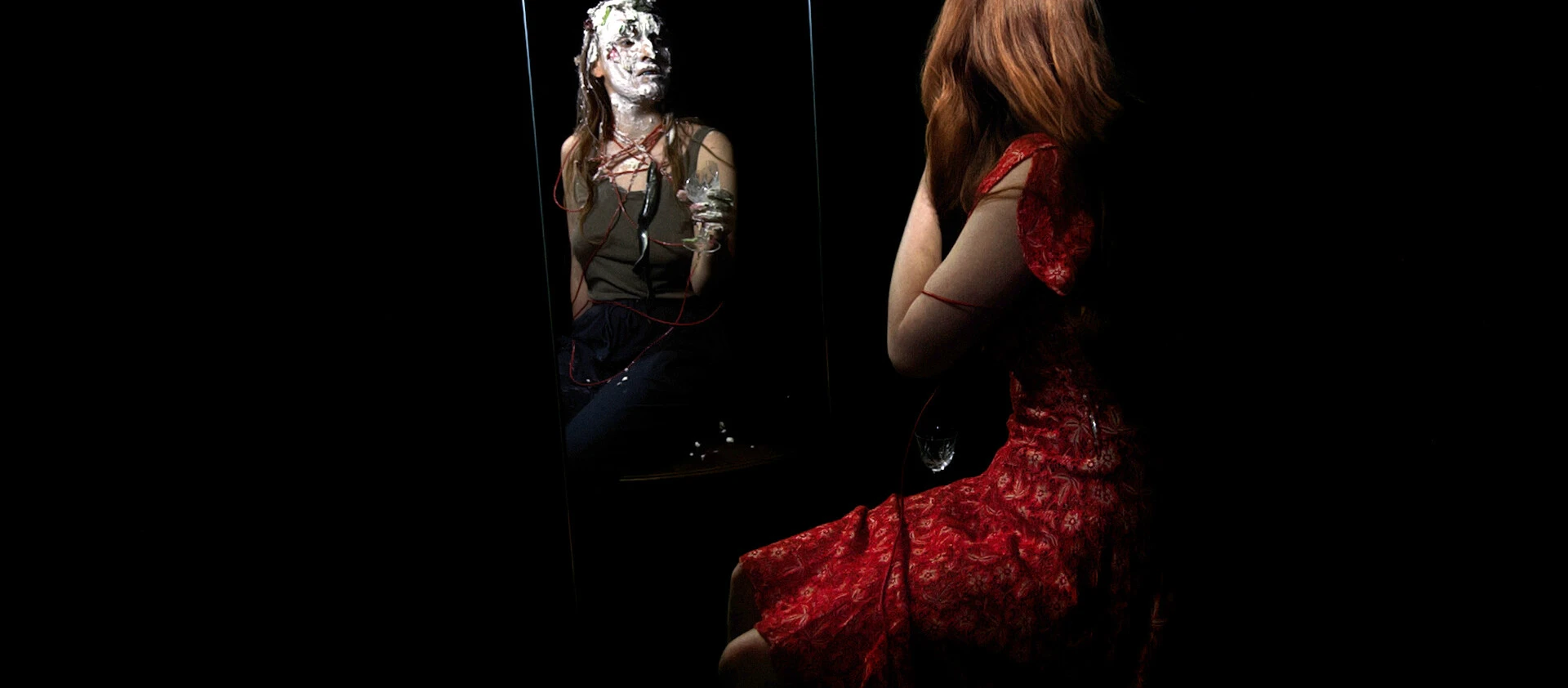
Then, Francis Poulenc composed the opera version twenty years later, and he also had that same desire to express something very human. When people hear the word “opera,” they often think of something grand. But as an opera singer, I’d say it’s actually a very ancient way of using the full range of the voice, without microphones, projecting both the smallest and the largest noises. And the ability of a human voice to express through opera is very special and maybe not that well-known in the society and in cinema world. That´s why we thought it was a great moment to bring it to film, after the play, and after the opera, now as an opera film.
Petar Penev: How difficult was it for two directors to collaborate, especially considering that one of you is also the star of the film?
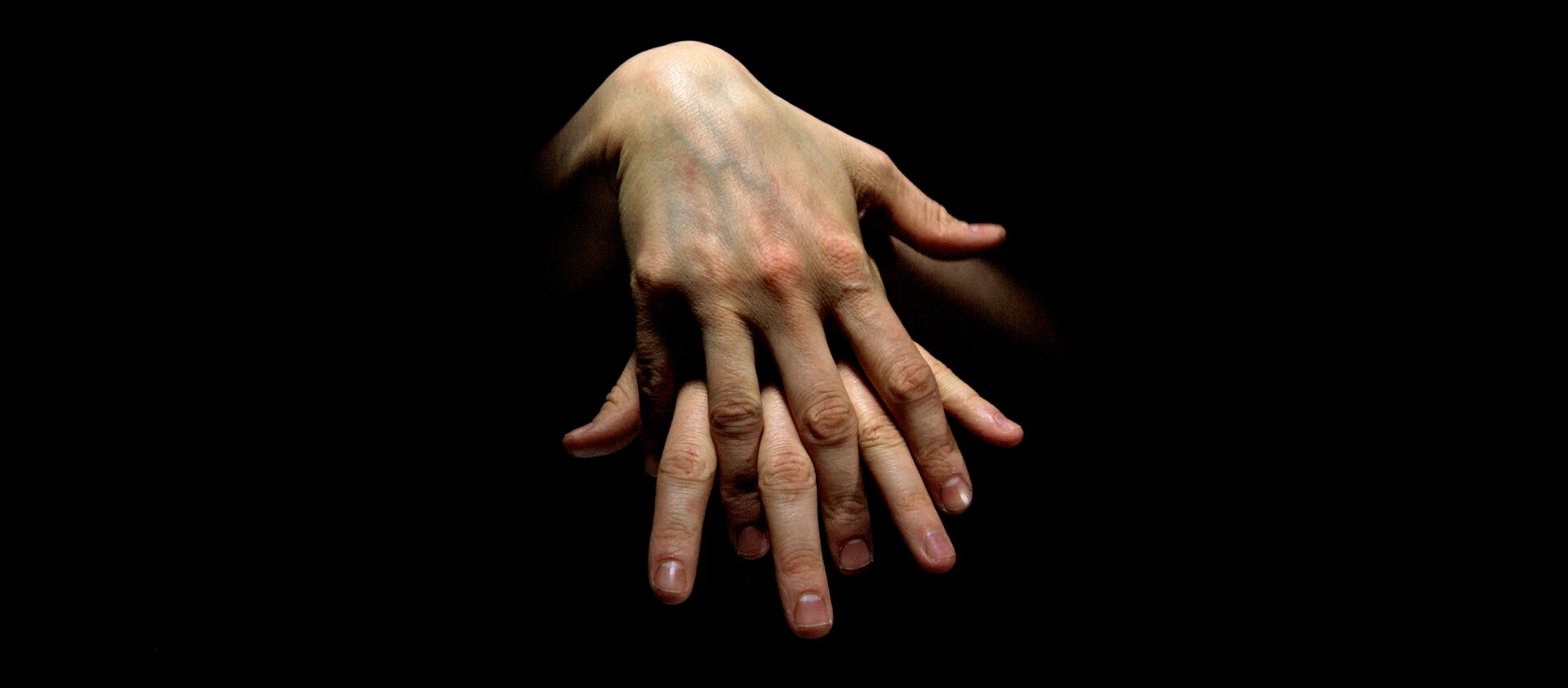
Andreas Schröder: Iphigenie actually approached me. I’m originally a visual artist, not so much from the world of film. I work more in video art, video performance, and installation. But she had seen a work I did that focused entirely on hands, hands against a black background, almost disappearing, and that became the link. So we sat together and brainstormed listening to the music over and over again, letting images emerge from that. We shared our associations and talked about how to interact with them, each of us coming from a different background. And from that process, the screenplay developed.
Worbes: And I just want to add one little thing, when the opera was first conceived, the director’s notes actually said that the main singer, or the actress, should also act as the director. She should work with the conductor, saying, “Here I want this tempo, here I want that,” because it’s a one-woman show. She is supposed to make the directional choices as well. Even Cocteau, when the play was first staged, originally wanted to direct it himself. But at some point, the singer said, “Actually, I have some ideas about how I’d like to do it.” And he said, “Okay, forget everything I said. You do it.” So yes, it’s definitely challenging to direct and act at the same time, but in a way, that’s the essence of this piece and how it was conceptualized from the beginning.
Interviewer: Petar Penev
Editor: Martin Kudlac
Petar Penev’s Take
The Human Voice is an experimental opera film by Iphigenie Worbes and Andreas Schröder, based on Francis Poulenc’s monodrama adapted from Jean Cocteau’s 1930 play, centring on Elle portrayed by Worbes, who, in the aftermath of a breakup, waits for a call from her former lover, their fractured conversation unfolding through music and imagery as his presence is conveyed only through her reactions. This fusion of cinema and opera in a hybrid form that both challenges and rewards attention. Music is not used decoratively, but functions as a core narrative force, shaping the film’s emotional register and theatrical intensity.
The film traces Elle’s emotional passage through separation—denial, nostalgia, anger, self-reproach, and eventual reckoning. Her former partner is never seen or heard directly; his presence exists only through Elle’s responses and the shifting musical texture. The fractured dialogue, distorted by a poor phone connection and dishonesty on both sides, deepens her isolation. The telephone becomes a central visual motif, simultaneously a conduit and an instrument of torment. In this suspended communicative space, the line offers connection and collapse in equal measure.
Andreas Schröder and Iphigenie Worbes’ work captures the claustrophobic intensity of Elle’s emotional state. A stark, near-empty darkness serves as the setting, concentrating attention on gesture, expression, and vocal performance. Cinematography by Schröder and lighting work in concert to externalise emotional strain: shadows carve the face, while subtle shifts in colour and illumination mark transitions in her psychological state. The musical score, inseparable from the opera form, reinforces the film’s articulation of grief and longing without overwhelming it.
The Human Voice is a focused meditation on communication and disconnection, intimacy and absence. Through its restrained visual language and rigorous integration of music, the film offers a distilled reflection on love, loss, and emotional exposure, standing as a compelling example of how operatic form can be reimagined through cinema.


