


COLLECTABLE STORIES: THE BLUE FARAWAY

THE BLUE FARAWAY
Short Talk with Sofia Spotti (director)
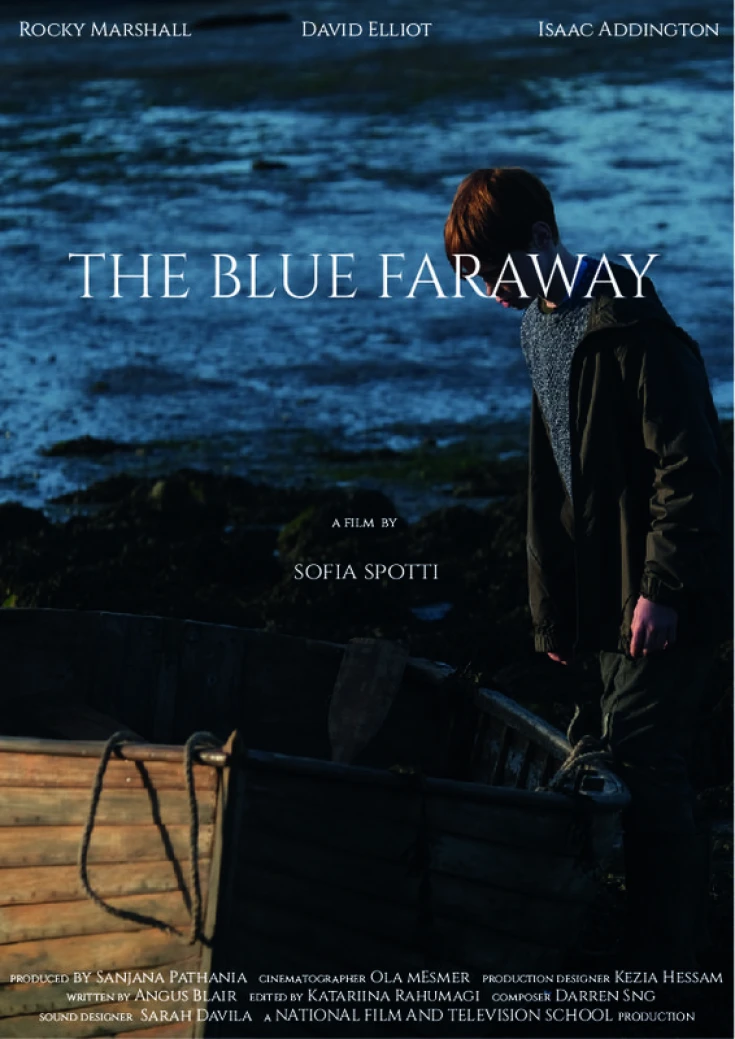
BEST SHORT STUDENT FICTION FILM Category
22nd IN THE PALACE International Short Film Festival 2025
United Kingdom, Fiction, English, 00:09:19
Synopsis: When an isolated man discovers his beloved dog is dying, he is confronted by long- buried childhood memories of life on the sea with his father.
Biography: Sofia Spotti is an Italian director currently studying an MA at the National Film and Television School. Her interests vary in many subjects with a specific attention on human behaviour and psychology. Her style is influenced by the Italian magic realism directors and her films try to investigate the relationship between reality and surrealism through a dreamy point of view. Her previous work was screened in different international film festivals such as Festa del Cinema di Roma.
 Sofia Spotti, director
Toma Manov: In your film, we are introduced to a protagonist who loses someone very close to them, a dog. Can your film be seen as a parallel between life and death, that even though they are opposites, they’re somehow interconnected?
Sofia Spotti: The death of the dog is what triggers the fact that he starts spiraling down into these memories of his dad, who obviously died when he was a child. So the two things are connected. It’s kind of like a little bit the idea of this repressed trauma, that when you experience something similar later in your adult life, it triggers something you might have repressed earlier in childhood. If that makes sense.
Toma Manov: Why did you choose the sea as both a visual and audio motif to tell your story?
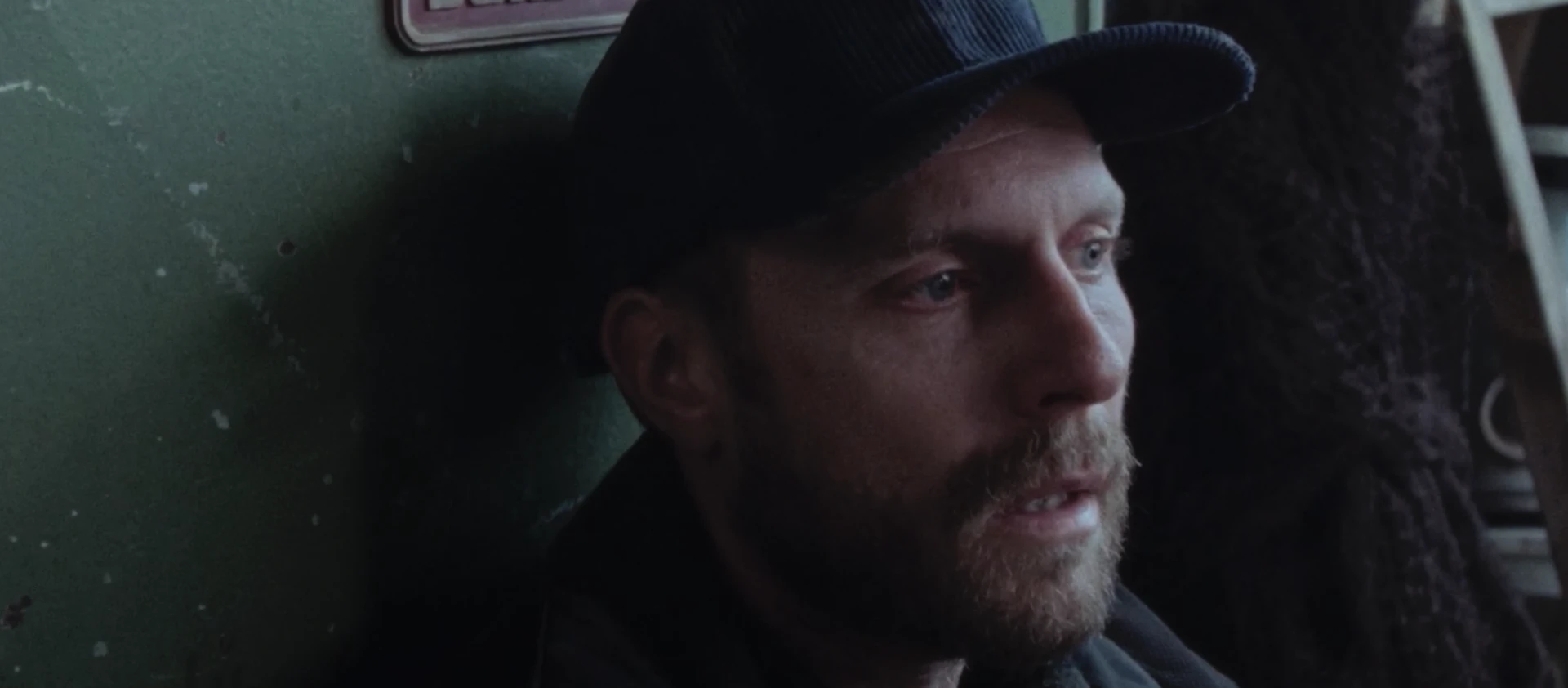
Sofia Spotti: So the story actually takes inspiration from a photograph I saw at a museum. It was a kid in a boat, and the title of the photo was “The first time I went back into the sea after my father died.” It’s a black-and-white photo, and for some reason, it just stuck with me. So I tried to come up with a story based on that photograph. The sea was always there from the beginning, I had this feeling of wanting it to be almost like a character in the film itself. But we had some limitations. We couldn’t really go to the seaside, because it was a student film, and we could only shoot within an hour’s travel from school. So I found this lagoon where we shot and tried to make it look like the seaside—but it actually wasn’t.
Toma Manov: When you saw that photo and it stuck with you, did you try to do any research on it, or was it unavailable and you just built the story from your imagination?
Sofia Spotti: I’m kind of a very visual person, so I always get ideas from something I see that sticks with me. I didn’t look that much into it. I kind of didn’t know what it meant. For me, my dad is still alive, luckily, but this film is about how he expresses love to me. Not by saying “I love you,” but by telling me stories about mythological creatures. So I didn’t really understand at the beginning what the story was about, but while I was writing it, or developing it with the writer, Angus, I realized that’s what it was about: how you express emotions you can’t say with words, through other means.
Toma Manov: Was it your choice to bring in a writer?
Sofia Spotti: Yeah, I mean, we pretty much developed it together from the start. Then he wrote a draft, and I did some director’s passes on that. But it was a collaboration from the beginning.
Toma Manov: You also mentioned drawing inspiration from stories your dad used to tell you as a way of expressing love. If it’s not too personal, are any of those stories subtly incorporated into the plot?
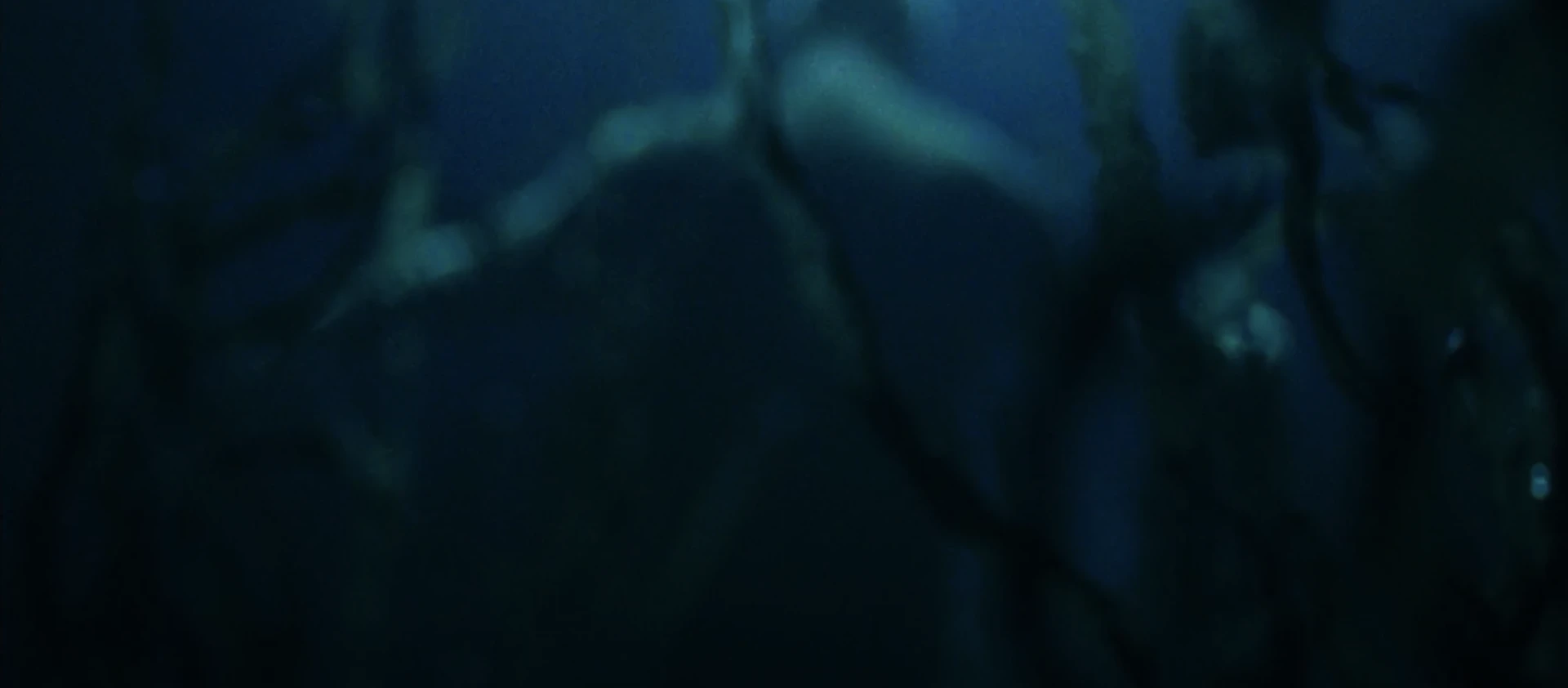
Sofia Spotti: I mean, my dad is very passionate about history, and he always used to tell me stories about Greek gods and whatnot. He used to make up stories with my puppets when I was a child. He never really said, “I love you,” but I know he does, because that’s how he shows it. So it’s not necessarily that this specific story is from him, but the influence is there. The mythological creature, Glaucus, is a god of the sea. And we kind of made up this little thing about the seaweed, but that’s also rooted in mythology.
Interviewer: Toma Manov
Editor: Martin Kudlac
Toma Manov’s Take
Elaborating on themes of quiet grief and emotional solitude, the short fiction film The Blue Faraway by Sofia Spotti explores the bond between a man and his dog as a gateway to deeper, unresolved memories of his father. In just over nine minutes, the story delicately weaves themes of loss, memory, and the enduring imprint of a father-son relationship.
The color grading plays a decisive role in helping the feeling of blues and loss be illustrated on the screen through an always present blue gradient, creating cold imagery. Furthermore, the slow-paced music that rhythms the editing achieves an overall monotonous pace with uninterrupted lengthy shots, gentle and stable camera movements, often centering the protagonist in frame, isolating him from the surrounding world both metaphorically and visually.
An essential reinforcement of the visual storytelling is the contrast between silence and musically charged scenes. As we witness the main character being emotionally vulnerable, the music intensifies and sets in stone the effective performance of the actors, getting across the director’s message concisely throughout the slow-burning storytelling rhythm.
The Blue Faraway is a quietly powerful and coherent exploration of grief and memory, distinguished by its evocative use of color grading, sound, and restrained cinematography. The blue tones and measured pacing effectively convey the protagonist’s emotional isolation and the weight of unresolved childhood experiences.
What earns the film its place in the 22nd edition selection of IN THE PALACE is its minimalist yet expressive storytelling, aligning with contemporary trends in intimate, character-driven dramas. Its subtle emotional impact makes it well-suited for audiences interested in reflective cinema touching on messages with a deeper meaning, and platforms that highlight personal narratives and mental health themes.
Moreover, the film’s focus on the human-animal bond as a context for an emotional journey into the past driven by nostalgia adds a universal accessibility, inviting viewers from varied backgrounds to connect with its themes of love and loss. This broad appeal positions it well for festivals that celebrate empathetic storytelling and films that explore complex inner lives in a shorter format.


