


COLLECTABLE STORIES: SWANLAKE

SWANLAKE
A Short Talk with Stella Traub (director)
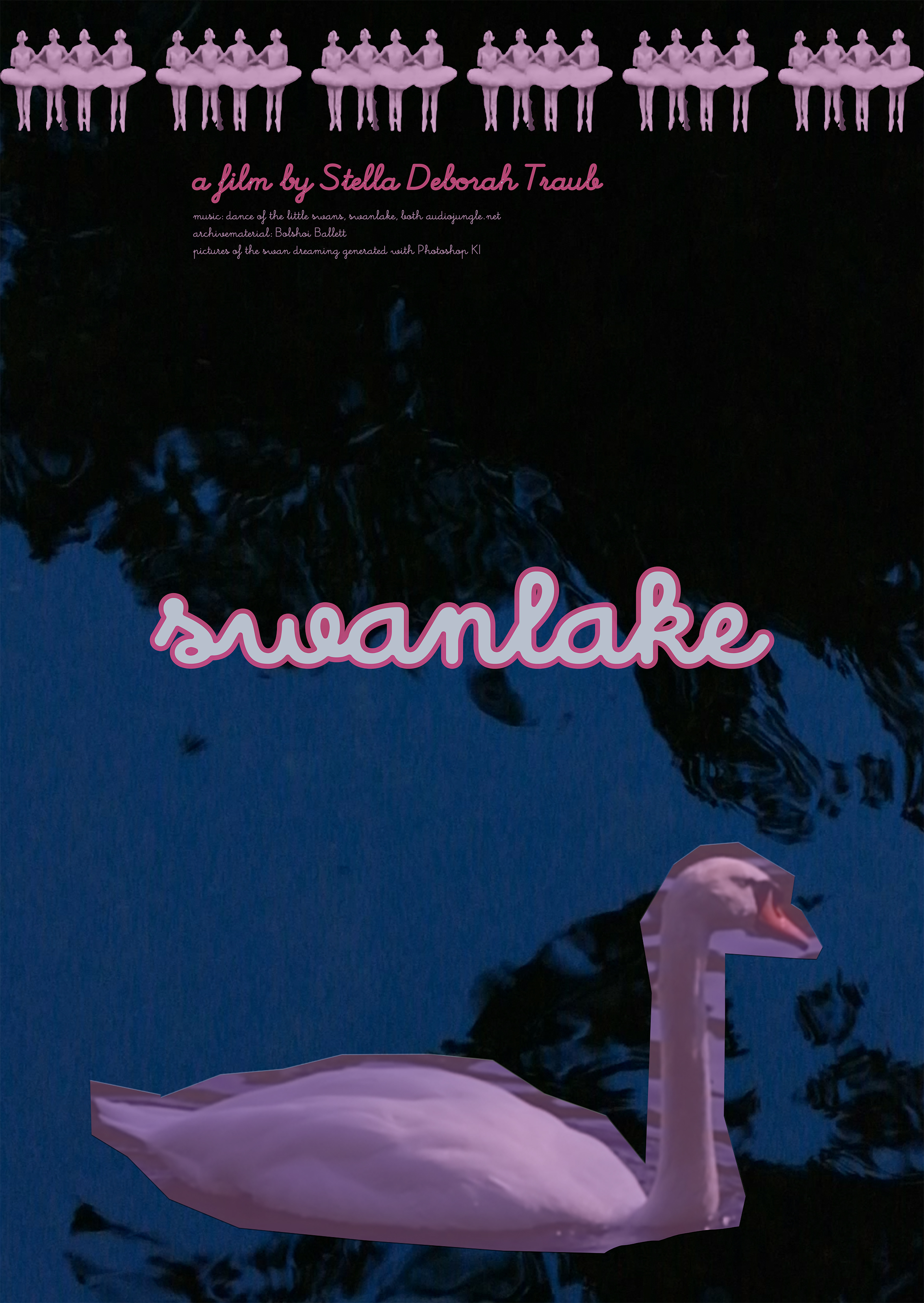
BEST STUDENT DOCUMENTARY
22nd IN THE PALACE International Short Film Festival 2025
Germany, Documentary, German, 00:05:33, 2024
Synopsis: When we are ill, all we want is one thing - to stop being ill. The filmmaker sees a swan in a duck pond and dreams with Long Covid of the realm of the healthy. An essay about enchanted sick people and dreaming birds.
Biography: Stella Deborah Traub, born in 1996, is a freelance photographer and studies documentary film directing under Prof. Karin Jurschick at the HFF Munich. They are part of the interdisciplinary artist collective queer:raum. In their work, they deal with feminist narratives and social class relations.
 Stella Traub, director
Evgenia Evtimova: This is a very thoughtful and experimental film essay. It feels personal, would you call it autobiographical?
Stella Traub: I’d say it’s autofictional. The moment you turn a personal experience into a film, it becomes fictionalised, there’s no way around it.
Evgenia Evtimova: We’ve all experienced illness, especially during the Covid years. Your way of portraying it is very abstract, especially through your use of mixed media. How did that approach come about, and was it difficult to implement?
Stella Traub: Around that time, I just felt really strange. I wanted to express what was going on inside my head, something that felt like a dream, or even a fever dream. That’s when I started experimenting with AI.
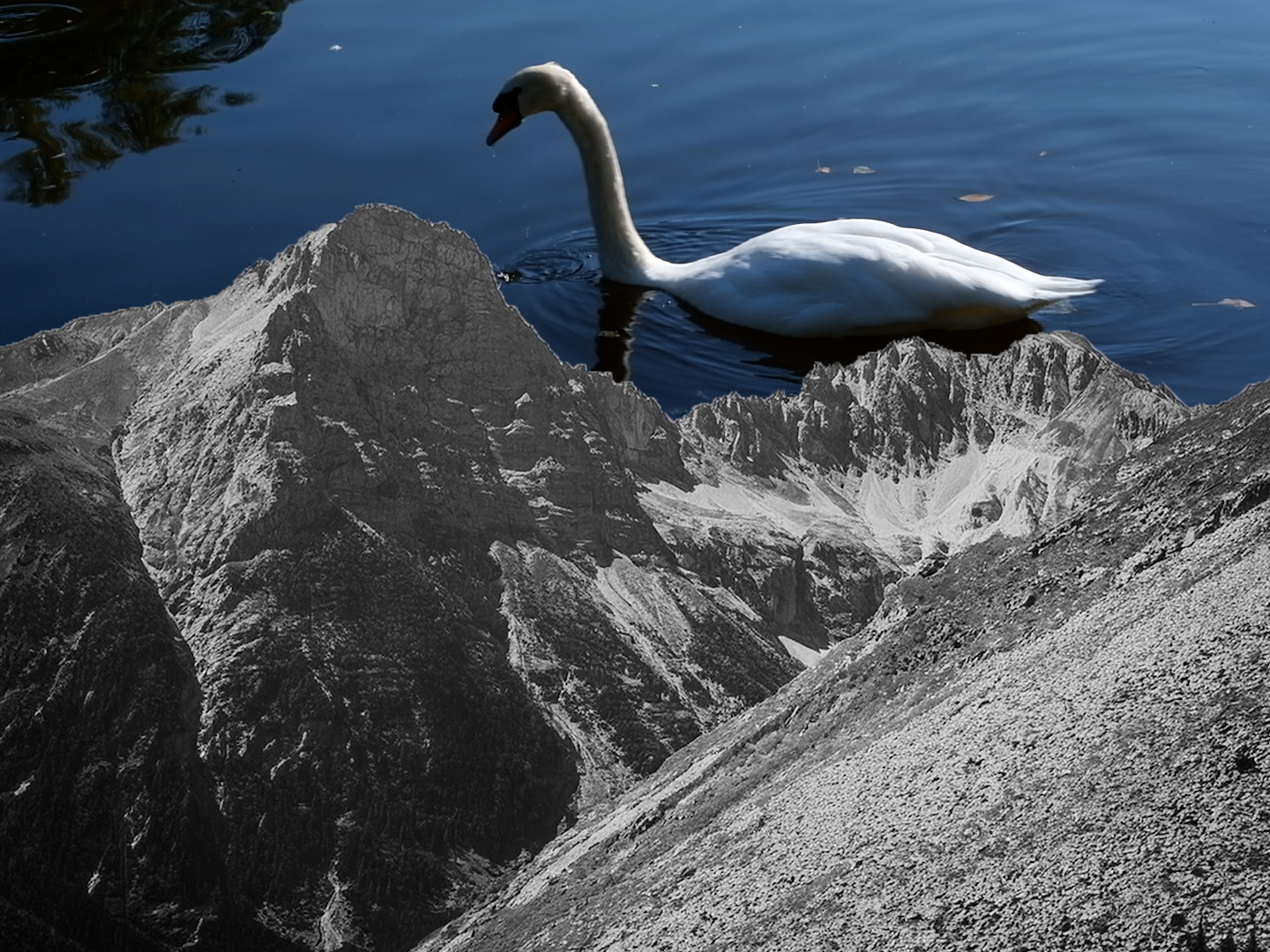
At first, I made AI images of a swan doing absurd things, shopping in the supermarket, jogging in the park, standing on red carpets. I showed these to friends, and eventually, the idea of using a real swan and inserting it into various photo scenarios emerged. It all came from wanting to depict that surreal, in-between state I was in.
Evgenia Evtimova: AI can take us anywhere these days, but the way you ground your story in very tactile imagery still feels very human. Another thing that stands out is how you handled every aspect of this film, you directed, shot, produced, edited. What was the hardest part, and why?
Stella Traub: Definitely the filming. I was very sick during that time, and just physically getting up, going outside, carrying a camera, it wasn’t easy. The writing felt more like writing a diary, so that part came naturally. Editing also followed a kind of gut feeling, so that flowed as well. But the act of filming, getting myself together to go outside and shoot, that was the toughest.
Evgenia Evtimova: What came first, the essay or the visuals? And did you plan the footage while writing, or was it more intuitive?
Stella Traub: I wrote the essay first, then filmed, edited, and went out again to shoot what I felt was missing, so it was quite a layered process. But the filming itself was intuitive. I’d go out and think, Okay, I need the swan now… I need some ducks… maybe some funny ducks. It was a bit like collecting documentary footage, responding to what the essay needed in the moment.
Evgenia Evtimova: Was there anything that changed significantly from the original essay once you started editing?
Stella Traub: Yes, actually, the entire dream sequence at the end wasn’t part of the original essay. That came during the editing process. It just felt right, and the film needed it.
Interviewer: Evgenia Evtimova
Editor: Martin Kudlac
Evgenia Evtimova’s Take
Stella Traub’s Swanlake is a quiet, poetic reflection on illness and longing, delivered in the form of a hybrid essay film that blends diaristic voiceover, observational footage, and surreal mixed media. Made during a period of long Covid and premiering at Oberhausen in 2024, the five-minute short draws a line between the personal and the abstract, grounding its emotional weight in the ordinary image of a swan gliding in a duck pond.
“I would call it autofictional,” says Traub, whose presence behind the camera is as essential as her voice within it. The film is unmistakably intimate, yet resists the trappings of pure autobiography. Instead, it becomes a shared metaphor, a subtle, fragmented portrayal of the suspended state of sickness, where time seems to bend and reality softens at the edges.
The film opens grounded in reality: a pond, a swan, grey skies. But as Traub’s narration drifts into dreamlike speculation, about being sick, about swans jogging or riding the subway, the visual language of the film begins to shift. Through a playful but precise use of multimedia images, collage, and layering, Traub taps into the psychological dislocation of illness, where memory and imagination blur, and the longing for normalcy becomes surreal. What began as casual experiments with AI quickly turned into a more tactile, realistic play with diverse art mediums, which became central to the film’s final act, where the swan enters a fever dream of supermarkets and red carpets, absurd and beautiful all at once.
Swanlake is a human work. This is partly due to its handmade feel, Traub handled every aspect of production herself, from cinematography and editing to sound and final mix. Her limited energy during the shoot (she was still unwell while filming) only adds poignancy to her process. “Filming was definitely the hardest part,” she reflects. “Going out with the camera while sick wasn’t easy. Writing was like keeping a diary, it came naturally.”
The voiceover, elliptical and introspective, was written first and later adjusted during the edit, which itself shaped what additional footage was needed. This looping workflow, essay, footage, edit, return, mirrors the rhythm of recovery: stop-start, reflective, nonlinear.
Crucially, Swanlake never begs for empathy. It’s neither an open wound nor a recovery narrative. Instead, it lingers in the strange, in-between space of the not-yet-well. It’s a meditation on illness not as a spectacle but as a state of consciousness, hovering, disembodied, absurd. In just over five minutes, Swanlake manages to be both micro and cosmic. It’s about one swan, one filmmaker, one illness, but also about every person who’s ever felt cut off from their own body, and dreamed of gliding back into themselves.
A fragile, inventive gem from Germany’s emerging experimental scene, Swanlake marks Traub as a singular voice, unafraid of the personal, and unafraid to transform it.


