


COLLECTABLE STORIES: SIX

SIX
Short Talk with Leoni Xerovasila (Director)
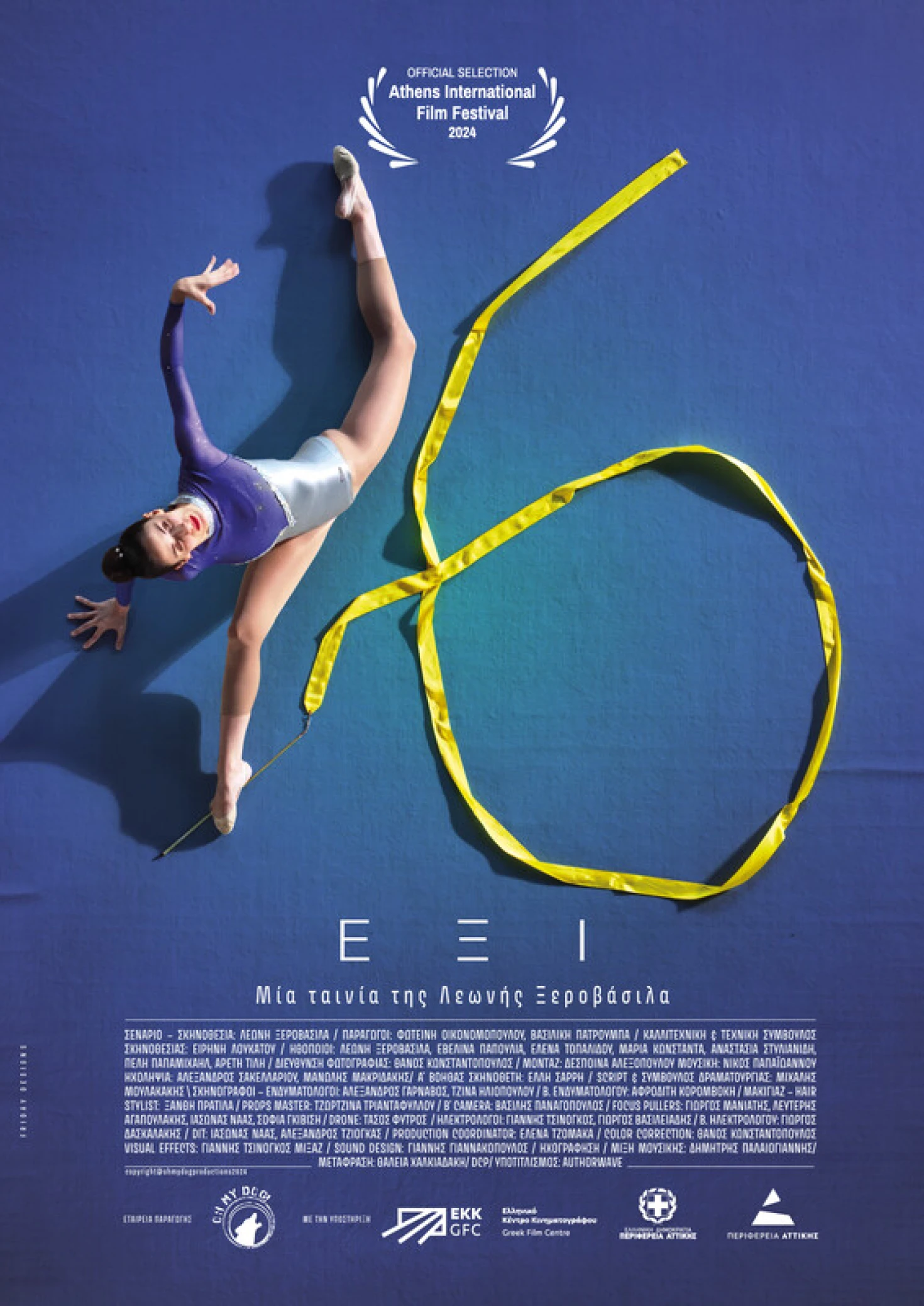
BEST SHORT FICTION FILM Category
22nd IN THE PALACE International Short Film Festival 2025
Greece, Fiction, Modern Greek (1453-), 00:12:26, 2024
Synopsis: A rhythmic gymnastics champion is in a tense psychological state, caught between the past and the present. She constantly has nightmares that interfere with her daily life. Unable to drink water normally, she weighs it and knows that 6 sips is 100 g. Her life becomes increasingly heavy. The pressure builds and the nightmare returns every night. The sound of a waterfall in her mind becomes gigantic and invites her to make peace with it and move on with her life.
Biography: Leoni Xerovasila was born in Athens. She graduated from The National Theatre of Greece Drama School & the Panteion University Department of Psychology. She was a European Champion in rhythmic gymnastics. She works as an actress. The film titled Six (2024) is the first film she has directed, written the script of and played the leading role. Six premiered at Athens International Film Festival & Microμ Film Festival winning two awards for Best Actress & the Public's Second favorite film.
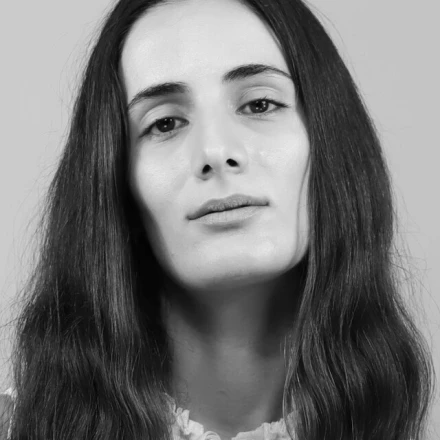 Leoni Xerovasila, director
Toma Manov: The whole visual, and also audio, aesthetic of the film is centered around the motif of water. Where this comparison comes from?
Leoni Xerovasila: The water is a very strong symbol in my movie because it’s a real story. It’s about one chapter of my life. And I used the element of water to show the life of this heroine and how stuck she is. Because when I was an athlete, a former athlete, we counted the water. We counted the water because we knew that six sips were one hundred grams. We counted everything, because we counted our kilos. So this element of water is very important to me. It’s present through the whole movie, and it follows the character, showing how her life is stuck.
Toma Manov: Since you said the film comes from personal experience, is the idea more about portraying sport as something toxic, or as something that’s maybe not entirely negative, but addictive?
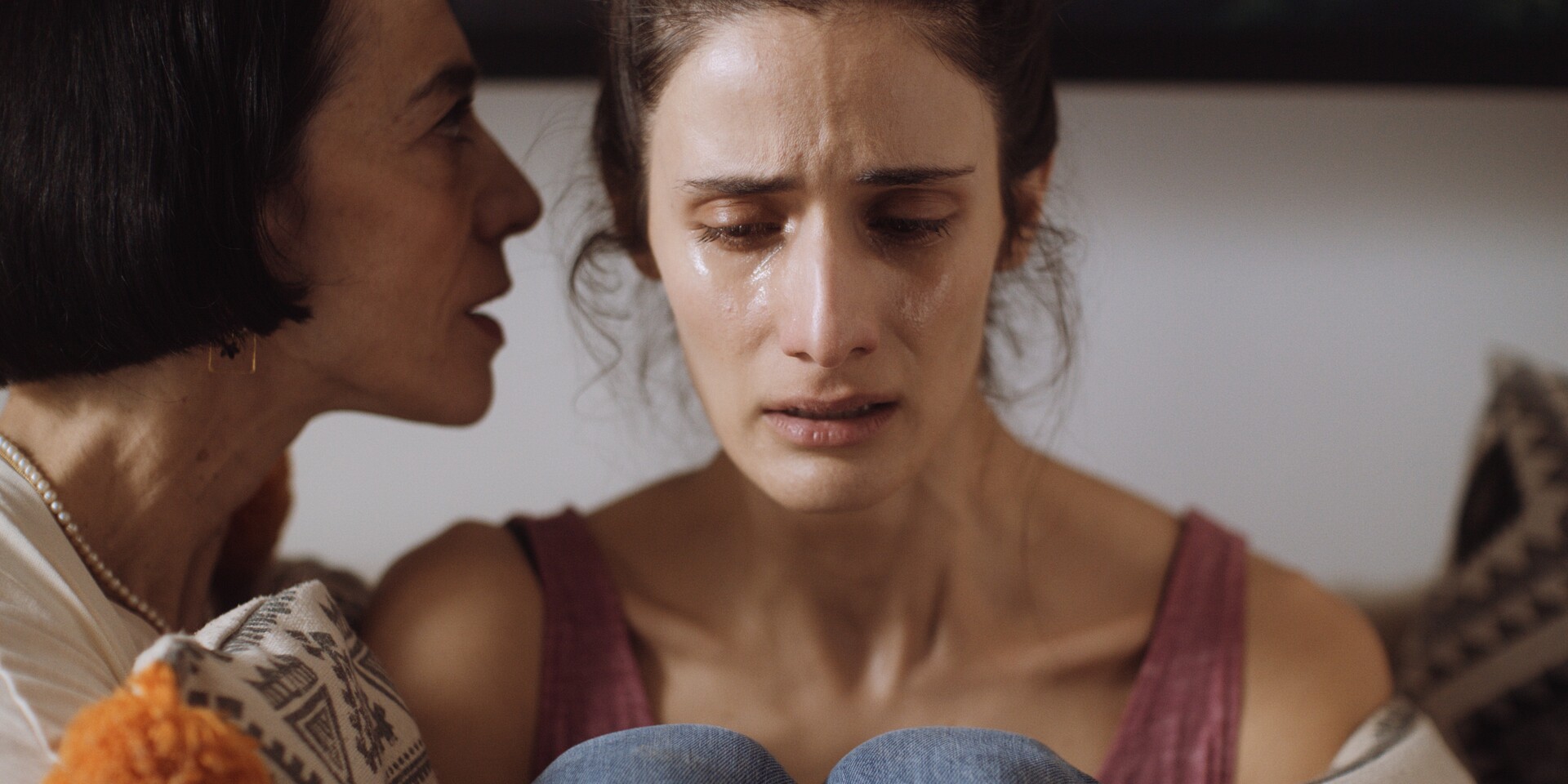
Leoni Xerovasila: It’s very personal, but I tried to show it in a more poetic and symbolic way. I don’t want to judge anything or criticize the system. We already know about the championships and how tough the life of champions really is. I wanted to express the feelings behind all that. I wanted to go into her mind, to show what is so chaotic and so hard for this girl. And when that life stops, what comes the next day? Because she doesn’t really have a life outside of it. She keeps going back to the same nightmares again and again. So, I wanted to show that side of the sport. It’s a sport that shows girls with ribbons and glitter, but it’s not like that. It’s very tough.
Toma Manov: How did you manage to handle both acting and directing at the same time?
Leoni Xerovasila: It’s my first film after finishing studies, so it was very important for me to tell this story. I didn’t think too much about how hard it would be. But in the next film, I don’t think I’ll do this again because this one is so personal, and I felt that my involvement had to be that strong. So I wrote the script, I directed, and I acted. But it was hard. I had people on the team who operated the camera, who managed the clapperboard, and did the filming. I would watch some of the shots and then continue, we didn’t have time to check everything after each take. But yes, I had help, and I had a very good team who understood what I wanted to do.
Interviewer: Toma Manov
Editor: Martin Kudlac
Toma Manov’ Take
Six, a 12-minute short film directed by Greek filmmaker Leoni Xerovasila, who stars in the lead role, belongs to the realm of fiction but presents itself through a highly personal and introspective lens. The film is constructed with close attention to rhythm, tone, and visual coherence.
The editing plays a central role in the structure of the film. The pacing is rapid and persistent, employing a fast-cut montage style that sustains a continuous state of tension. This tempo shapes the viewing experience, placing emphasis on physical presence and reaction rather than linear storytelling or dialogue. The visual transitions often avoid traditional continuity, instead favouring the emotional aspect of the project.
Sound design is a defining feature of Six. A recurring audio motif resembling flowing water is present throughout the film. This sonic element is layered into the film’s structure and recurs with consistency, helping to establish rhythm and atmosphere. The use of minimal diegetic sound shifts the focus to movement, breath, and ambient tones, which guide the film.
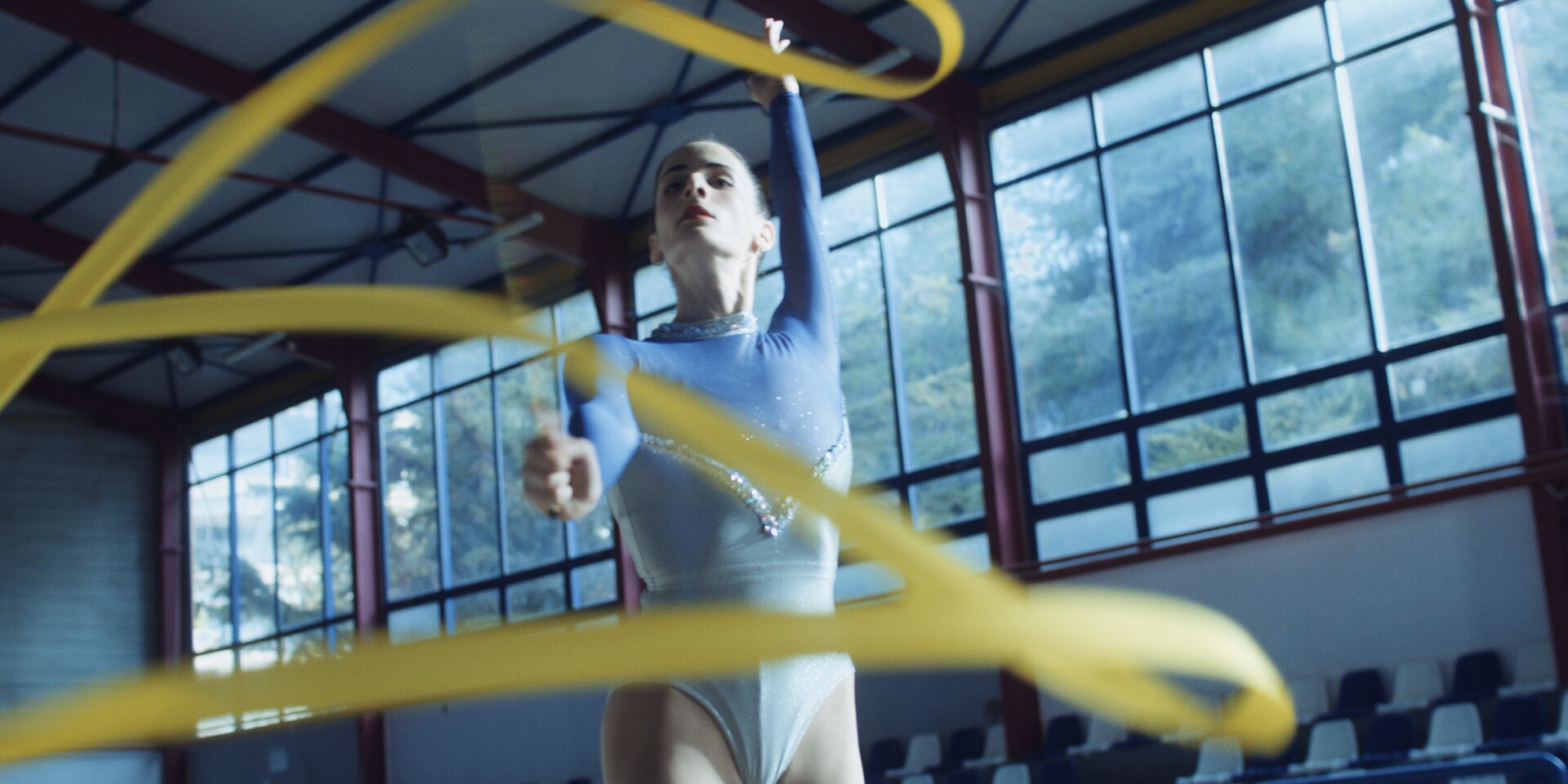
Cinematography is marked by a saturated colour palette, with an emphasis on cold tones, particularly blues and greys. These choices enhance the film’s controlled aesthetic. Lighting and contrast are used to highlight isolation, repetition, and symmetry within the frame. The camera often stays close to the protagonist, capturing physical details.
The costumes and the contents of the shots are treated with consistency. The protagonist remains dressed in athletic wear throughout moments charged with symbolism, reinforcing the thematic and visual continuity of the piece. The set design is humane and realistic, placing the emphasis mainly on the character’s movements and her immediate surroundings. Visual repetition is frequently used, particularly during episodes of stress and anxiety.
The absence of extended dialogue directs our attention to non-verbal expression. Narrative progression relies on visual cues, choreography, and a deliberate spatial rhythm. The result is a work that uses cinematic language, rather than exposition, as its primary mode of communication. With a focus on atmosphere and performance, Six presents a concise and straight to the point short film, enhanced by its use of editing, sound, and visual composition.


