


COLLECTABLE STORIES: INTERMISSION

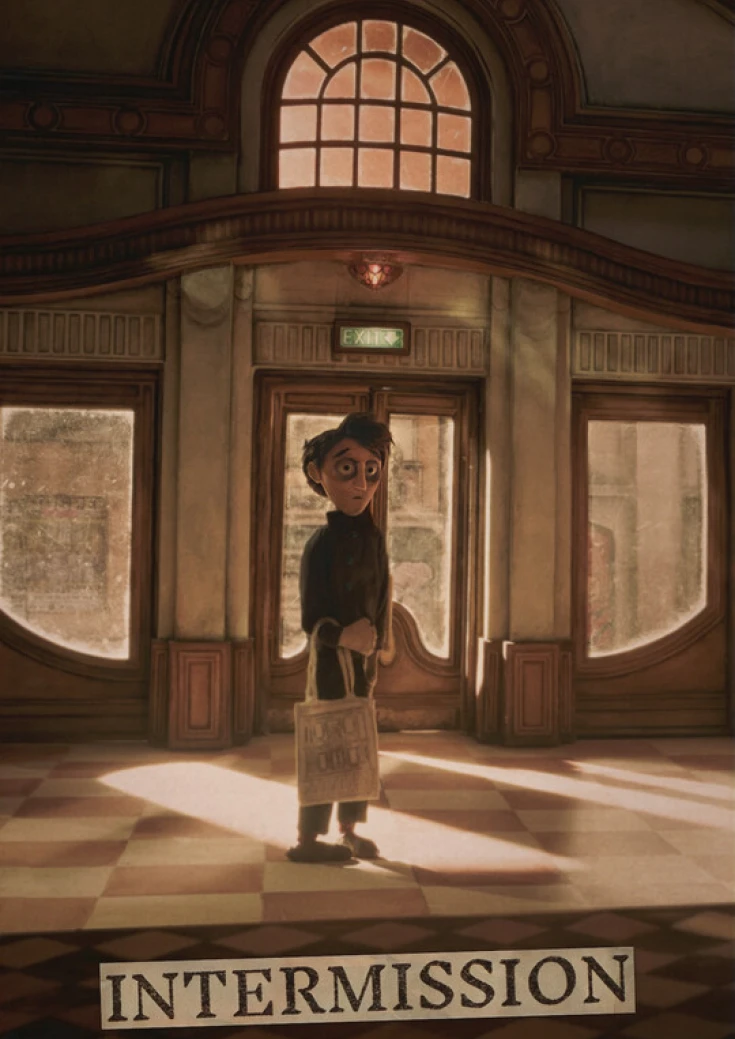
INTERMISSION
Short Talk with Milo Bonnard (director)
BEST SHORT ANIMATION FILM Category
22nd IN THE PALACE International Short Film Festival 2025
United Kingdom, Animation, English, 00:09:50, 2024
Synopsis: A young man goes to a concert with the hope of being moved - only to feel more detached than ever before.
Biography: Milo Bonnard is a French filmmaker & a recent graduate of the National Film and Television School (UK). Using stop-motion, he crafts stories full of irony and warmth, capturing the absurdities of everyday life—its social discomforts, fleeting joys, and occasional transcendence.
 Milo Bonnard, director
Toma Manov: Milo, the animation is incredibly intricate. How long did it take to complete the entire film?
Milo Bonnard: It was a long process from August 2023 to May 2024. I never actually counted the exact number.
Toma Manov: The character design is so unique. Did you draw inspiration from any specific art styles or films?
Milo Bonnard: I really like animating every frame, I try to keep the characters constantly moving. In the puppet design, the clothing is not fixed to the puppets, so it’s always floating or shifting slightly. That means you also have to animate the clothes, which gives the film a breathing, living quality that I really like. As for inspiration, I draw from a wide range of films and styles, to be honest.
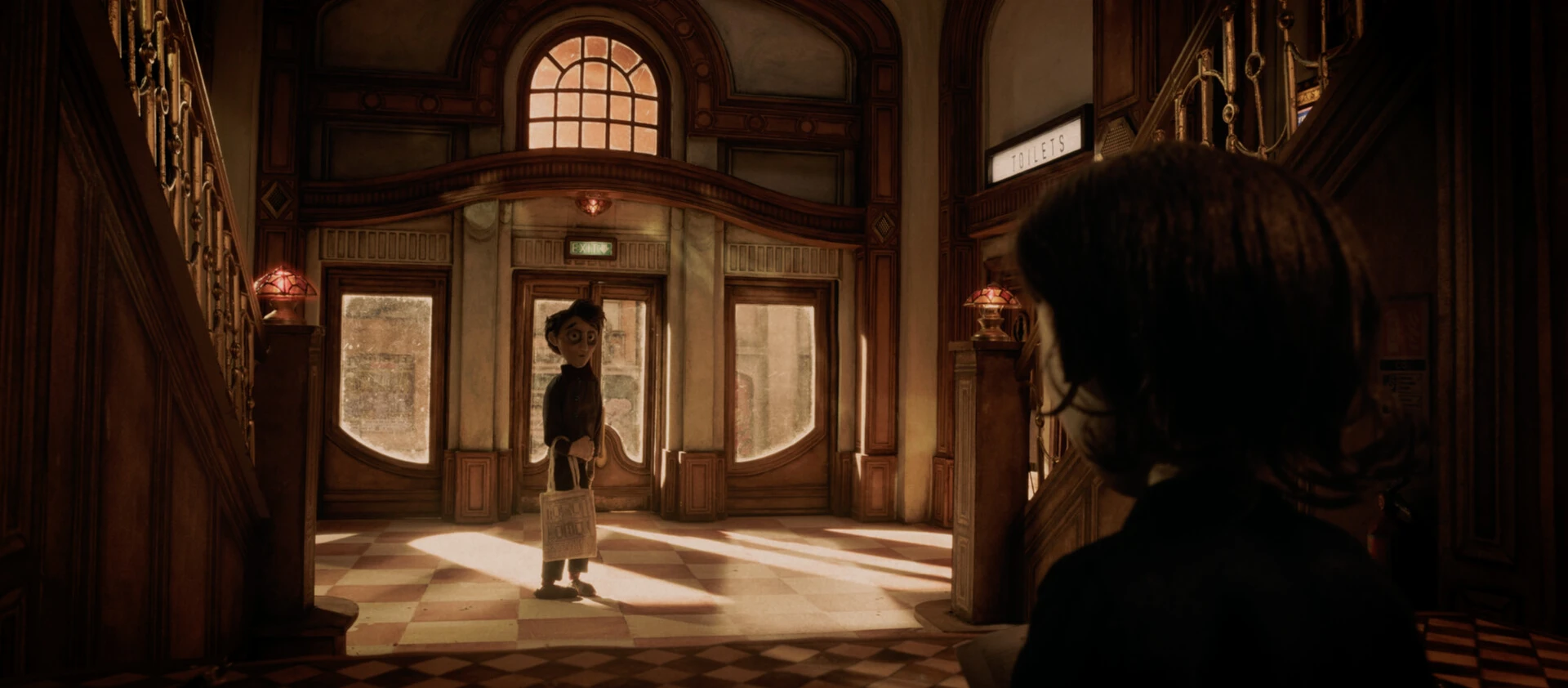
Toma Manov: The film centers on a young person feeling disconnected during a cultural event. Is it a kind of parody of people overperforming at these events, showing exaggerated emotional reactions that don’t match the protagonist’s inner state?
Milo Bonnard: That’s something I was thinking about. When we go to these events, we start to question our own emotionality. Am I not being touched by this? Am I emotionally numb? I based the film on my own experience working in a concert hall. I remember wondering if I was the only one who felt out of place, while everyone else seemed deeply moved. But then, there’s a disconnect too, you see people being expressive but maybe not fully aware of what’s happening around them. I liked exploring that tension, how people try to connect. Performative behavior can feel pretentious, but it’s also kind of sweet, because it shows how people are just trying to reach one another.
Toma Manov: You mentioned working in a concert hall, so are there parallels between you and the protagonist?
Milo Bonnard: Yes, absolutely. In the film, there's a cloakroom attendant, that was actually my job in real life. I based the film on a combination of real moments, observations, and experiences, not just from the concert hall, but from everyday life. Like any filmmaker, I drew from what I knew.
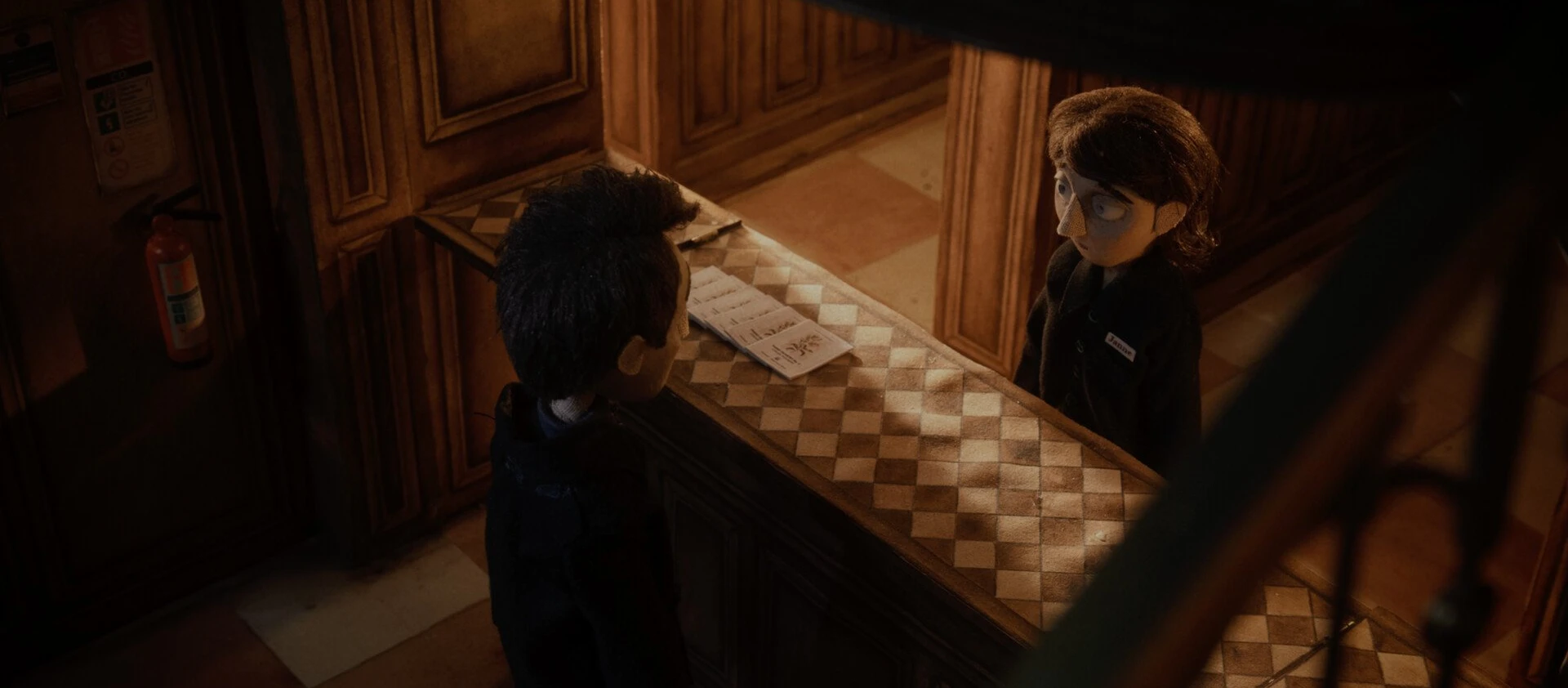
Toma Manov: There are several quiet glances exchanged between the protagonist and the cloakroom attendant. In the end, the protagonist is the last one to leave. Is it fair to say that, despite feeling disconnected during the event, he leaves having found something he was looking for?
Milo Bonnard: Yes, personally, I think so. The fact that he made the effort to go out, to attend the concert, that’s already meaningful. He might have felt detached during the experience, but by the end, I think there’s a small but real connection. And that makes the whole journey worth telling.
Interviewer: Toma Manov
Editor: Martin Kudlac
Toma Manov’s Take
Intermission is a student animation short produced in the United Kingdom by director Milo Bonnard. Standing at nearly 10 minutes long, it tells the story of a young man attending a concert, hoping to find societal reassurance, yet ends up feeling more disconnected than ever.
The animation employs the use of puppets whose parts were not entirely pieced together, allowing for a flowing effect of the cloth. The appearance of the protagonist, as well as his story, take direct inspiration from the personal experience of the director as a young person navigating social connections in a cultural environment. The colour scheme is toned down, focusing predominantly on the darker side of the spectrum, this is a direct reflection of the character’s inner world.
The dark brown and black undertones create a visually unwelcoming, almost lifeless environment, enhancing the social troubles and anxiety of the protagonist. Story-wise the film is concise and straight to the point. It takes place over one evening, during a musical concert. The essential actions happen at the time of the intermission, where the main character’s attention is captured by a female cloakroom worker. The cinematography changes, as the frames become focused on the young woman, who we are observing through the eyes of the protagonist, from afar, without making any advances, in shots that feature her in her working environment.
We do not hear any lines from the male protagonist, which is in contrast with the social circle that surrounds him, a purposefully exaggerated voice work adds to the comical effect of separation between the character and his environment. In the end, although not having any immediately evident moment of clarity, the pacing takes a slower momentum, suggesting the open end of the story that follows. The colours take on a darker, greener tone and most light sources are not present in frame, contributing to the mood and thematics of social isolation, lack of empathy and connection.
Intermission captures the quiet turbulence of social disconnection through a uniquely crafted puppet animation. Its storytelling and darker visual palette effectively mirror the protagonist’s inner feeling of detachment, making the film both personal and universally relatable.
What sets the film apart is its tactile animation style, puppets paired with expressive sound work that strengthens the contrast between the protagonist and the world around him. The film taps into a growing trend of student films that explore mental health, identity, and alienation through personally-inspired approaches. Intermission will likely resonate with audiences who appreciate introspective narratives and non-verbal storytelling and is well-suited for festivals that highlight emerging animation talents, student work, or themes of loneliness and social struggle.


