


COLLECTABLE STORIES: ELEPHANT IN THE ROOM

ELEPHANT IN THE ROOM
Short Talk with Micha Muhl (director) and Sebastian Ganschow (cinematographer)

BEST SHORT STUDENT FICTION FILM Category
22nd IN THE PALACE International Short Film Festival 2025
Germany, Fiction, German, 00:14:30, 2025
Synopsis: Gilles celebrates his finissage while his severely overweight brother passes out drunk. Upon waking, he discovers ‘Art has no borders’ on the back of his head—and pretends to be unconscious, triggering a bizarre rescue operation involving a fire crane.
Biography: Born in 1995 in Chur, Switzerland and raised in Zurich, Micha Muhl came straight to film after school. After working on the cheapest and most expensive film sets in Europe and a master school with a Swiss scandal director, he found a suitable place at the famous Filmakademie Baden-Württemberg in the tiny town of Ludwigsburg.
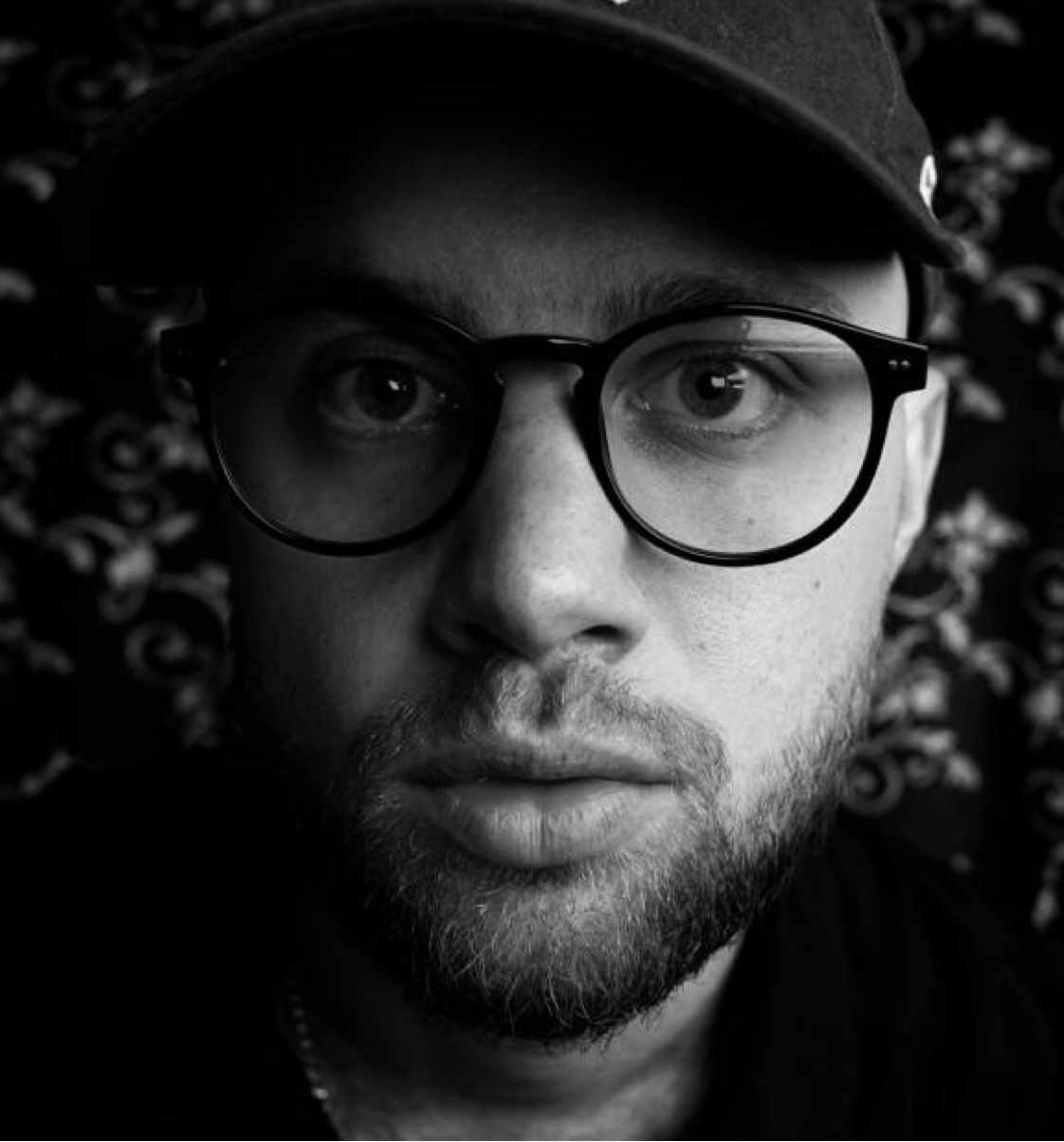 Micha Muhl, director
Kaloyan Vasilev: The film is great, but the trailer feels like something different, this is the first time I’ve seen it. In the film, you present the statement art has borders. Can you elaborate on that?
Micha Muhl: I think it’s more of a question than a definitive statement. In the film, it first appears as art has no borders, and then that’s erased, leaving art has borders. And I do think art has borders, of course it does.
Kaloyan Vasilev: Was there something that inspired you to include that idea?
Micha Muhl: Yes. The origin of the story was something I heard from a friend, about a very big man who had to be rescued from a party. That got me thinking: how would I react in that situation? Then I started reflecting on how often we take someone else’s suffering, turn it into a film, screen it at festivals, get praise for it, and then move on. We might raise awareness, yes, but sometimes I wonder if we’re just using someone’s pain. It’s something worth evaluating each time.
Kaloyan Vasilev: And what about the photographs in the film? They’re striking, were they taken by a real photographer?
Micha Muhl: Yes, they were taken by the film´s cinematographer Sebastian Ganschow. We shot them during pre-production. You see some of them in the trailer. They’re all in motion because early on we had the idea to open the film with a moving sequence that transitions into the exhibition images.
We spent a day in the studio with friends, shaking the camera violently. We shot at two frames per second with a long exposure, then pulled the best frames and printed them. And yes, there were two naked men involved.
Kaloyan Vasilev: Inside the scenes where the person is playing dead, there are many close-ups, while the exterior scenes have wider shots with the crowd. Was that a deliberate contrast?
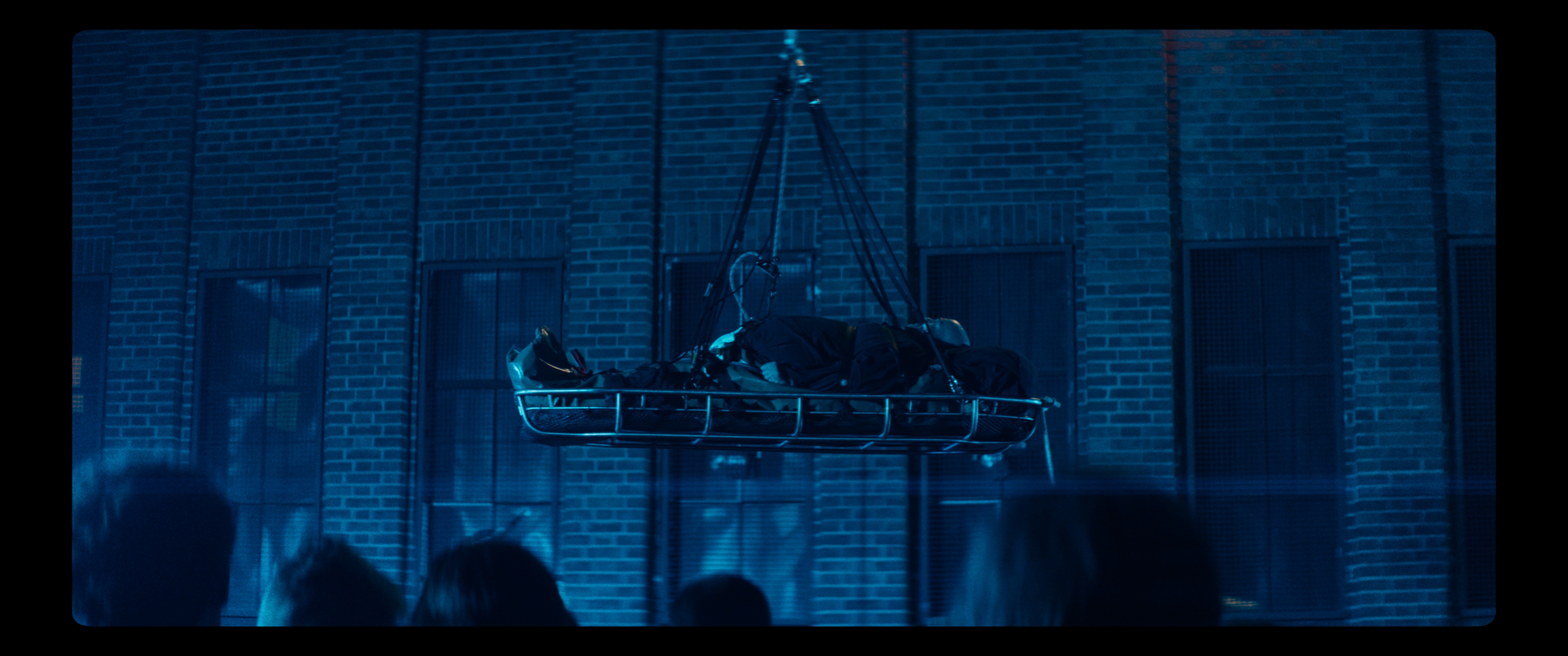
Sebastian Ganschow: Initially, we planned to do long takes and let the camera move through the scenes. But after the first day, Misha looked at the footage and said, “No, this needs to be closer, more stressful.” From that point on, we shot almost exclusively on a 200mm lens. That gave us a compressed, chaotic feeling. There’s only one real wide shot, the crane shot you see briefly in the trailer. Technically, there are a few others, but even those are on long lenses to keep that condensed, tense atmosphere.
Kaloyan Vasilev: Is this your first time working together?
Micha Muhl: No, this is actually our fourth film together.
Sebastian Ganschow: Yes, we’ve been working together for quite a while, and I really enjoy it. Finding Misha was one of the best things that could have happened to me.
Kaloyan Vasilev: And in the process, are there no creative clashes?
Micha Muhl: I don’t fight with Sebastian. I trust his spontaneous decisions.
Sebastian Ganschow: He “beats me up” sometimes, but only figuratively. (laughs) Mostly I just remind him of things he said two days earlier. “Remember you wanted to do it this way?”
Interviewer: Kaloyan Vasilev
Editor: Martin Kudlac
Kaloyan Vasilev’s Take
The 15-minute-long German production Elephant in the Room, directed by Micha Mühl, is a sensitizing student short film that, by showing us an art exhibition gone wrong, opens a debate about whether art is just for entertainment or if it has a deeper purpose, and what roles both creators and consumers play in that.
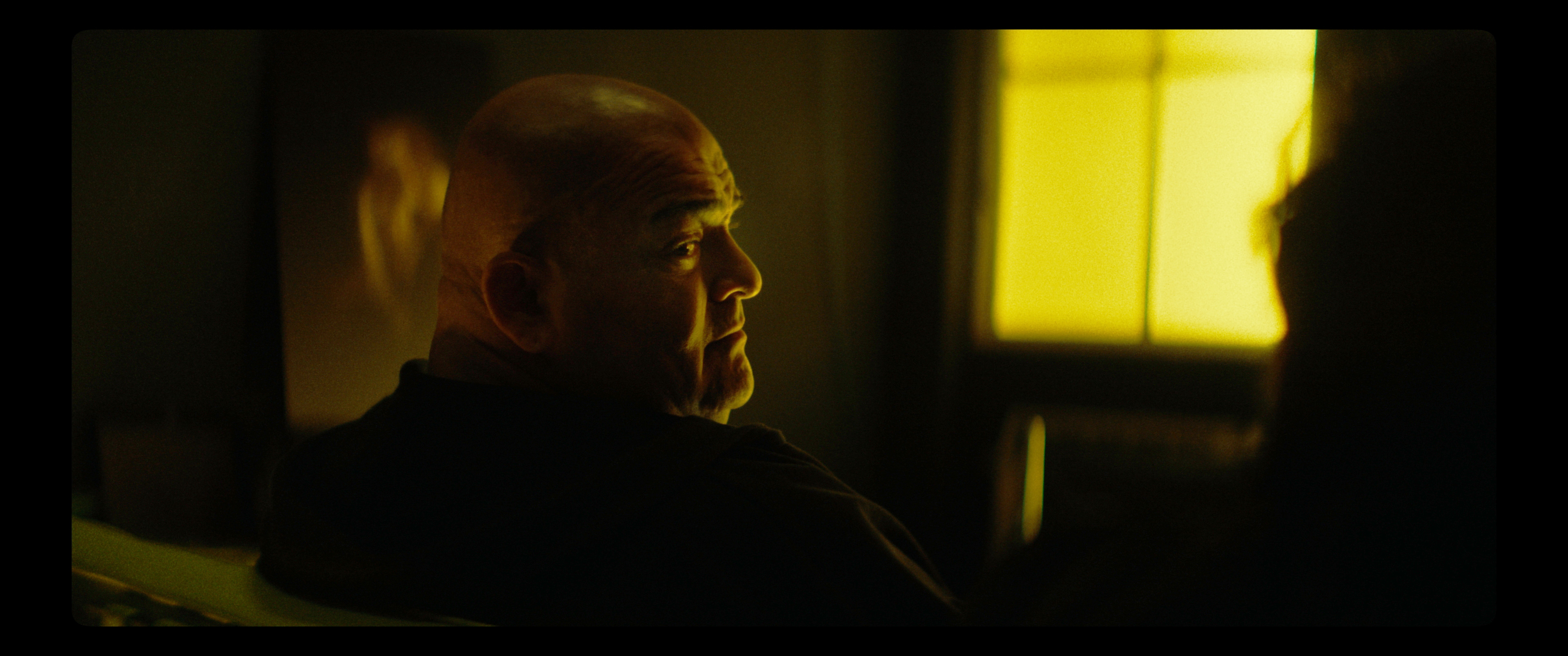
As the film opens, we notice tighter framing, which, combined with close shots and rapid montage, helps the soon-to-emerge mass hysteria develop quickly and hit harder, both for the characters and for us as viewers. Aside from the framing, one of the most noticeable elements is the vibrant use of color. Every frame has a dominant hue, which changes depending on the situation and location. This strengthens the film’s atmosphere and helps the viewer stay oriented inside the chaos.
One of the most interesting parts of the film is the way the club-like photography exhibition is used not just as a setting, but as a visual rhythm. The film alternates between the chaotic present at the exhibition and the peaceful scenes where the photographs were originally shot, featuring the same male body, repeated four times within the same frame, slowly moving. This hypnotic composition adds a surreal layer to the film. Then, toward the end, the close-ups from different angles of some important objects, shown with the right sound and color grading, prove that even simple elements can contribute to the film’s visual poetry when placed well.
Even though the whole story happens in a single location, much like in Luis Buñuel’s The Exterminating Angel, the story goes through a full roller coaster. It starts with a producer finding potential buyers, and a smiling photographer proudly presenting his work. But soon, the tone shifts to confusion, panic, and emotional reactions: tears, thrown fists, judgmental looks, all believable, thanks to a large and expressive cast. Together, these elements build a sharp critique of how artists are often manipulated by producers chasing only money. Consumers who don’t understand what they’re looking at, but still buy it because it’s labeled “art”, are targeted as well, especially through two naive characters who call everything “genius.”
Elephant in the Room offers a visually rich and well-paced critique of those who create, produce, or consume art purely for money or recognition. The short film manages to raise questions about the purpose of art and who controls its value. With that, it speaks not only to art students and professionals, but to anyone trying to make sense of the art world’s contradictions.


