


COLLECTABLE STORIES: DAGON

DAGON
Short Talk with Paolo Gaudio (director)
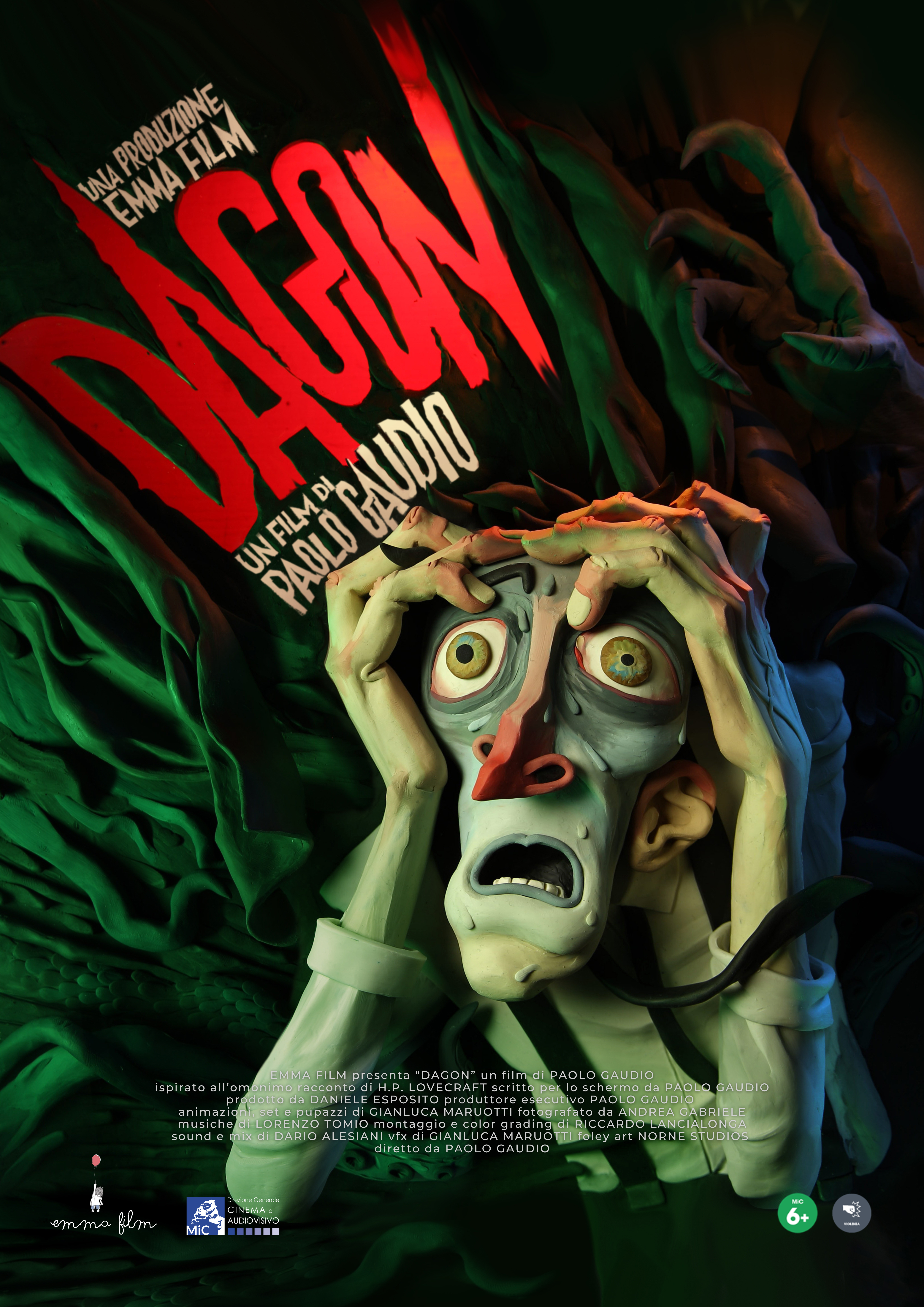
BEST SHORT ANIMATION FILM Category
22nd IN THE PALACE International Short Film Festival 2025
Italy, Animation, 00:06:07, 2024
Synopsis: DAGON is a stop motion animation short film freely inspired by the story of the same name by cult author H.P. Lovecraft. In 1919 San Francisco, a man is standing on the ledge of a building ready to jump. Desperate, he relives in his memories the absurd and shocking episode that led him to the brink of suicide: the encounter with the monstrous and mythological Great Old One, DAGON.
Biography: Paolo Gaudio is a director, screenwriter, and stop motion animator. For over 18 years, he has explored animation techniques for film, TV, and web. His feature debut, Reveries of a Solitary Walker (2015), won international awards. He received a Nastro d'Argento for Looney Foodz! (2018), and THE BLACK Recat screened at major fantasy festivals. Since 2019, he has led IngenereCinema.com and the docuseries Il Giro dell’Horror. In 2024, he released Dagon.
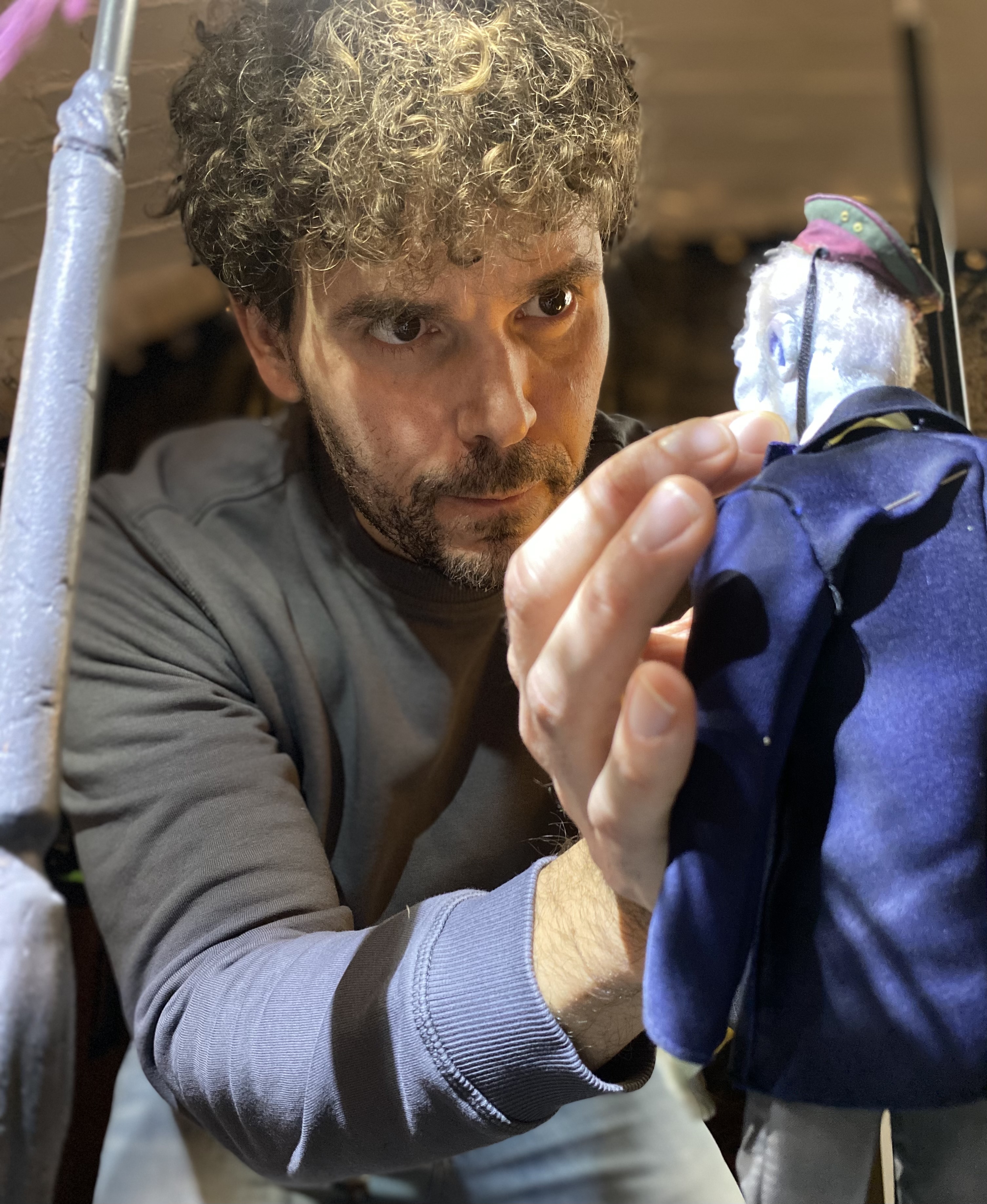 Paolo Gaudio, director
Kaloyan Vasilev: I can’t deny the resemblance to early German Expressionism, especially The Cabinet of Dr. Caligari, in the opening scene. There’s also a strong Cubist influence, reminiscent of Picasso’s paintings. Beyond these, and of course Lovecraft’s work, what other references inspired you?
Paulo Gaudio: Everything you mentioned is correct. My inspiration comes from German Expressionism, from Cubism, but also from Mario Bava’s films. I love his style, his work, and his ability to create expressionism through the use of color.
Kaloyan Vasilev: And do you animate your films yourself?
Paulo Gaudio: No, I work with Gianluca Maruotti, he’s a sculptor and animator. We’ve been working together for 15 years.
Kaloyan Vasilev: So he’s been your collaborator on previous films as well?
Paulo Gaudio: Yes.
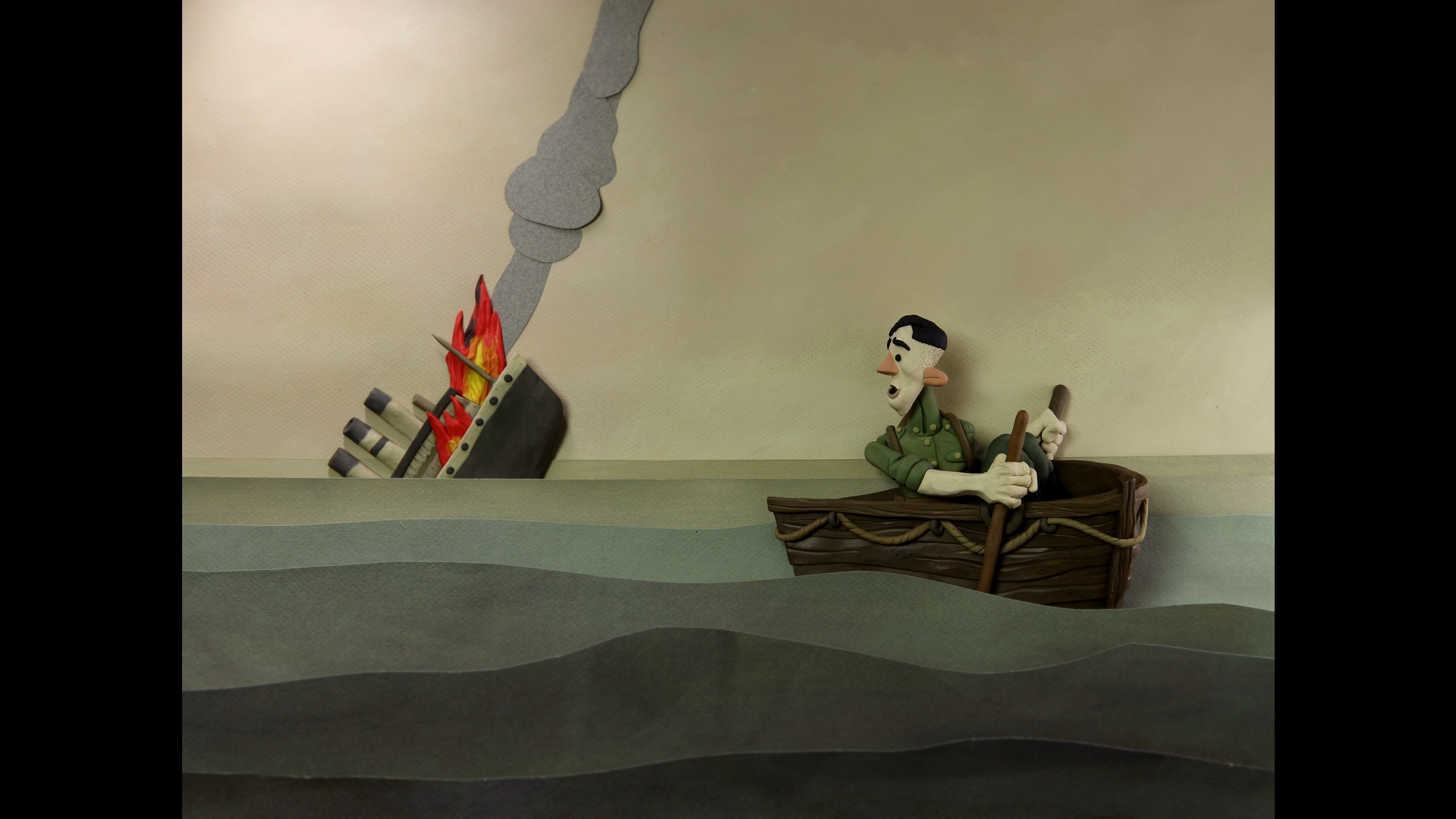
Kaloyan Vasilev: The animation here is incredibly smooth, the plasticine figures feel alive. Was that achieved through a very high frame rate?
Paulo Gaudio: We actually work in what in Italian we call passo 1, meaning one step at a time. But in this case, we used two frames for every change, so we’d shoot two frames, then adjust, then two frames again.
Kaloyan Vasilev: Looking at your body of work, you and your collaborator have clearly developed a signature style. You’re here today with your child, I imagine he hasn’t seen all your films yet. How does a younger audience respond to your work? Are they frightened?
Paulo Gaudio: My son saw this film for the first time yesterday in the theater. It was a beautiful, emotional moment for me. And why not? I love horror, I love fantasy, I love scary things. I think my films can be a small step for young audiences, something that brings them closer to the genre. That’s my hope.
Kaloyan Vasilev: Does Gianluca ever contribute to the ideas for the films? Or are you the “head” and he the “hands”?
Paulo Gaudio: Absolutely, it’s a collaboration. I start with the screenplay, but from that point we work together, drawing side by side, developing ideas together. Then we move to sculpting, and along the way, everything changes step by step.
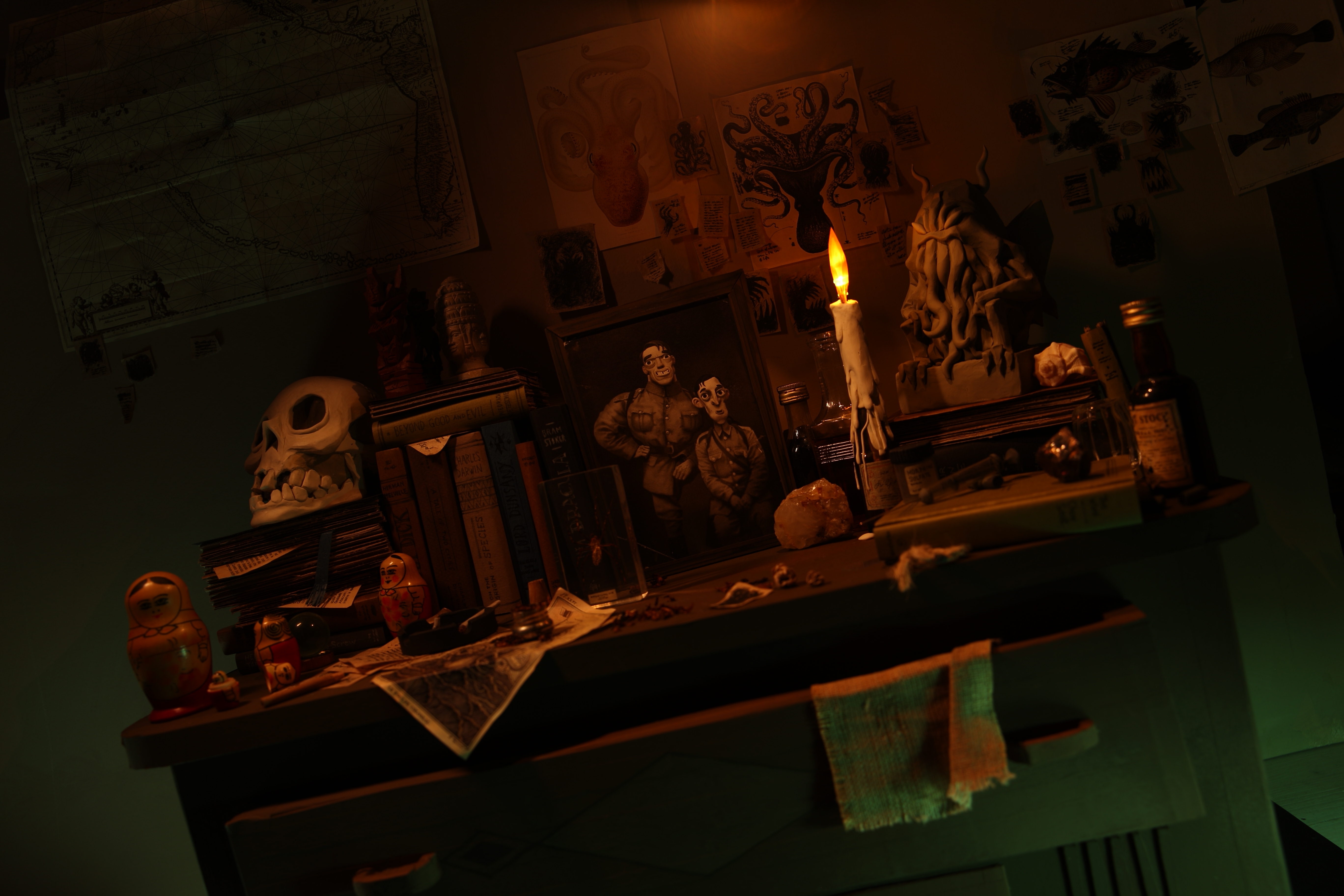
Kaloyan Vasilev: Your film feels huge when you watch it. How big was the actual production?
Paulo Gaudio: Thank you for saying that. In reality, it’s very small. Just three people working in a little studio in Trastevere, Rome. We worked for nine to ten months, eight hours a day, to produce six minutes of film. On a good day, we’d manage about four seconds of finished animation.
Kaloyan Vasilev: So nine months total for the whole project?
Paulo Gaudio: Yes, nine months.
Interviewer: Kaloyan Vasilev
Editor: Martin Kudlac
Kaloyan Vasilev’s Take
Italian production Dagon, directed by Paolo Gaudio, is a captivating 6-minute silent claymation animated short where the main character is followed to his death by an ancient god. The Gaudian short, freely inspired by the Lovecraftian novel of the same name, not a literal adaptation, but one that merges terror with stylistic homage, offers an intriguing experience as it fuses a variety of artistic styles such as German Expressionism, Cubism, and Italian horror from the era before the introduction of sound in cinema, all presented to us through the power of stop-motion.
It all starts with a play of reflections among the German Expressionist motifs dominating the main character’s apartment: the slanted window and walls, and the eerie green light filling the sky, provoke a strange discomfort. Besides the city apartment, we are presented with two other locations, the open sea, where our character is lost after an accident, and the island he finds himself on afterward, where Dagon hides. What’s interesting, though, is the way everything is presented. With a few exceptions, the film is made of plasticine, which, thanks to the meticulous work of animator Gianluca Maruotti, becomes an alive-looking fluid, shaping this horrific reality.
With all that said about the visuals, the sound design shouldn’t be left out. Not only do the ambient noises make this artistic melting pot of a world even more immersive, but the music, written by composer Lorenzo Tomio, also reflects every action, intensifies each emotion, and builds on the chilling tension. All this detailed work transforms the animation short into a horrific live painting, adding spice to a genre often considered to be “only for children.”
Dagon begins with its ending, immediately intriguing the viewer with what could possibly have led to it, and little by little, it guides us there. The characters convey all their emotions through the plasticine’s expressiveness, from despair to the paranoia that sticks with him after the first encounter with the monstrous god, as well as his physical degradation as the film progresses. The absence of dialogue throughout the entire film leaves diegetic space for both visuals and music to hold our full attention, allowing them to reach their full potential and transmit a contagious feeling of unease amid the rich environments precisely crafted down to the last detail.
In a nutshell, Dagon is a captivating claymation animated short that uses the stop-motion medium to blend a wide range of artistic styles from different eras to offer a fresh perspective on the Lovecraftian novel. Even if the film doesn’t follow current trends, as its references come from the last centurym its smooth visuals and evocative music help it stand out, allowing it to be appreciated by a broader audience.


