


COLLECTABLE STORIES: CANNED

CANNED
Short Talk with Sam Scheunders (producer)
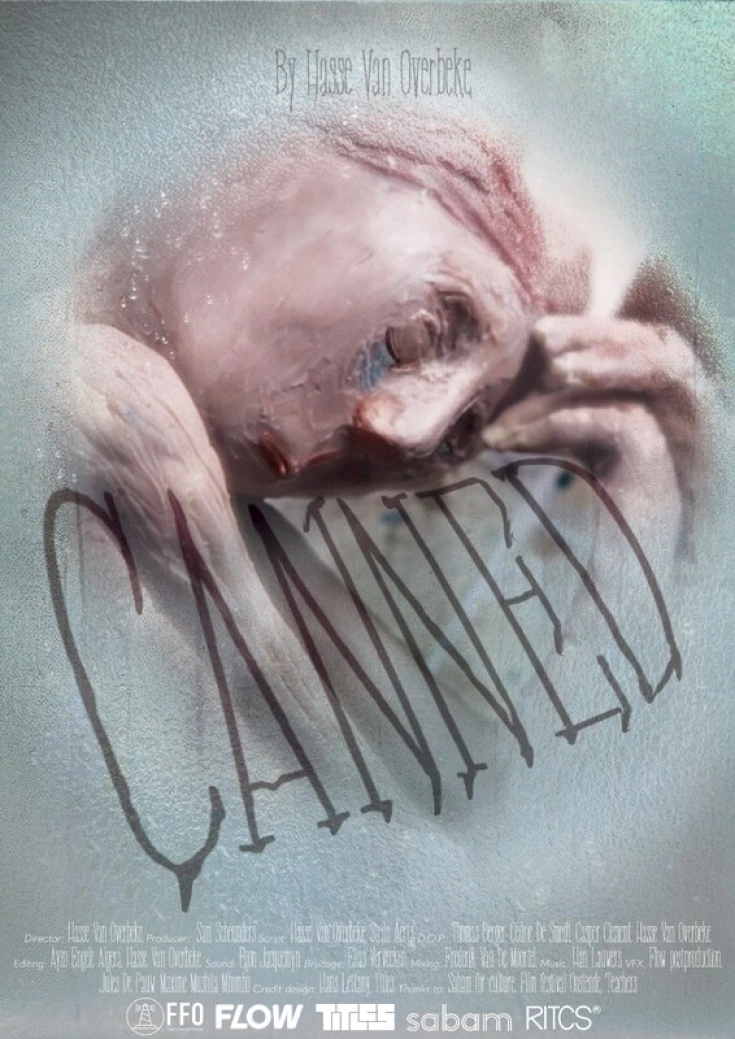
BEST SHORT STUDENT ANIMATION FILM Category
22nd IN THE PALACE International Short Film Festival 2025
Belgium, Animation, 00:06:07, 2024
Synopsis: Fourteen-year-old Sam is being bullied at school and takes refuge under a desk. In desperation, he puts the teacher's fishbowl over his head to protect himself from his bully. As he walks down the school's dark hallway, he glimpses his reflection. Seeing himself distorted by the bowl, his anxieties grow as he tries to shape his body to fit inside. When he encounters his mother, she reaches out to help him, but Sam remains hidden in his protective shell, unsure if he can face the world outside.
Biography: Hasse Van Overbeke, born in Belgium in 2001, discovered animation at age seven through Flipnote Studio on a Nintendo DS. This sparked a passion that led to art school at thirteen. Despite battling anorexia during difficult school years, Hasse recovered with support. In a master’s program, Hasse created the short film Canned, graduating with honours in 2024. Now focused on stop-motion and digital cut-out animation, Hasse enjoys yoga, gardening, gaming, and time with a beloved cat.
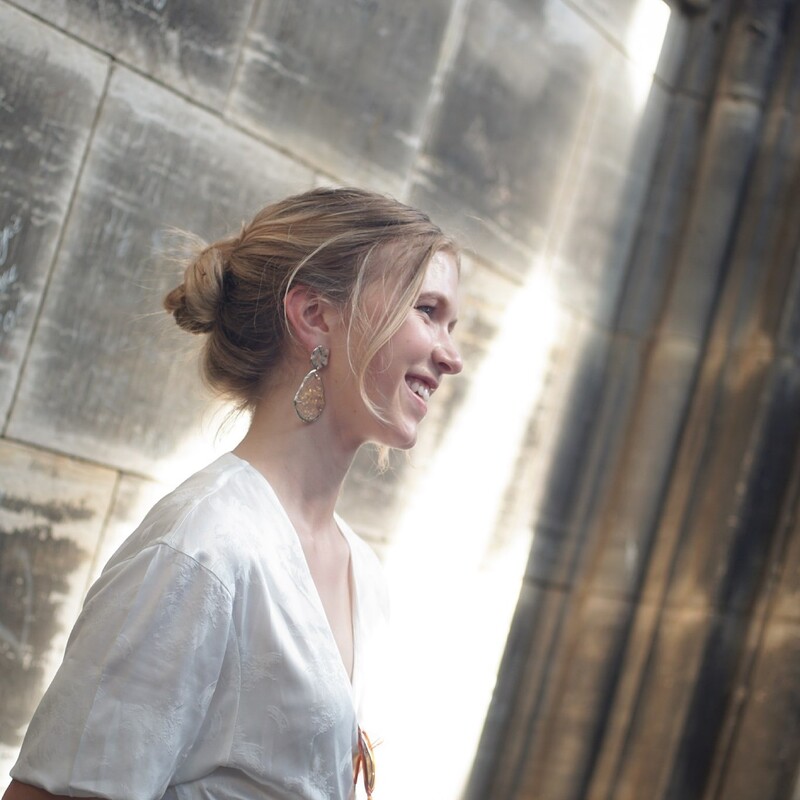 Hasse Van Overbeke, director
Evgenia Timova: As the producer, how did you support the director and manage to bring this stop-motion film to life?
Hasse Van Overbeke: It was a very difficult process. I think we had around 117 shooting days for just six minutes of film. It was really intense for Hasse [Van Overbeke], the director. It’s also a very personal story for her, and in many ways, making the film was a kind of therapy as well. I did my best to support her every single day. The whole project took two years, this was her master’s film, and I’m very proud of her, and proud to have produced it. I also want to thank the entire cast and crew.
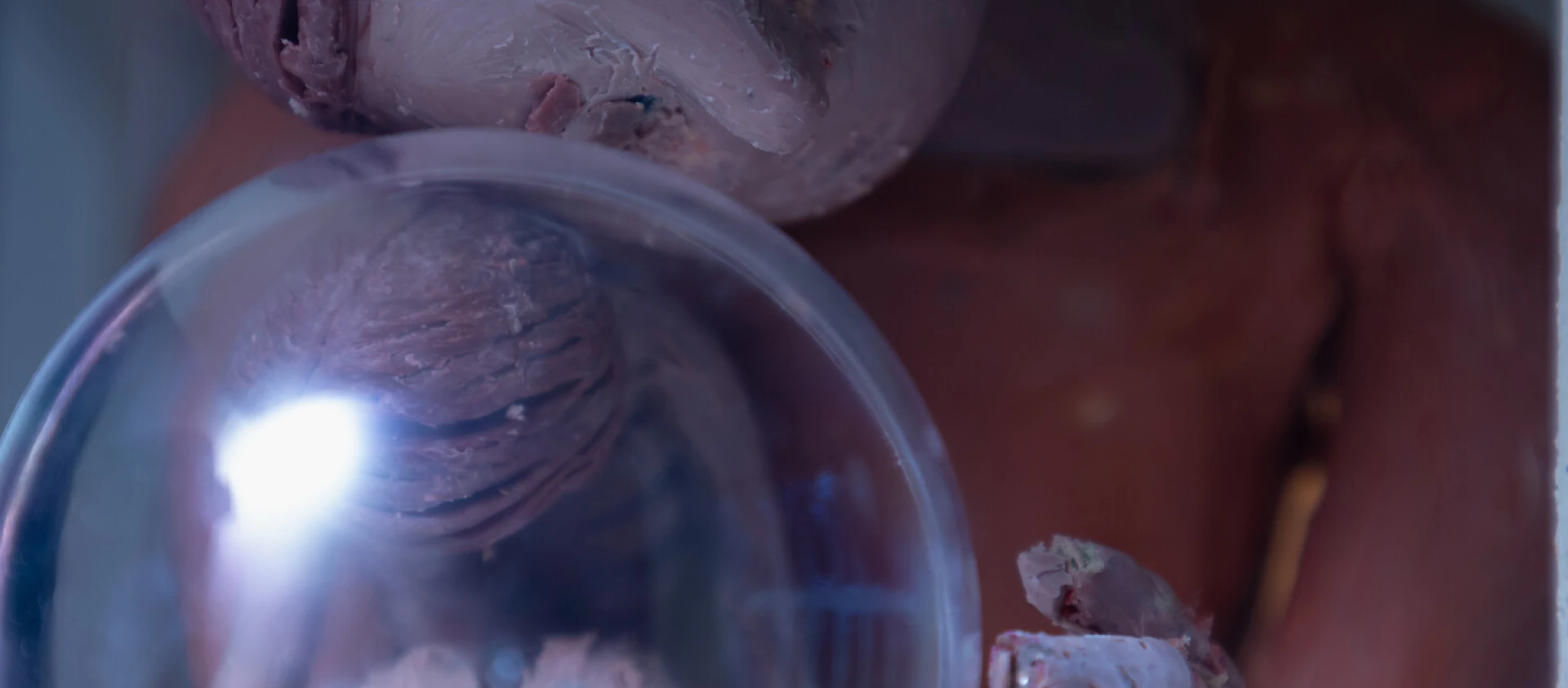
Evgenia Timova: In the film, the protagonist seems to realize they’re made of clay. That moment feels like it breaks the fourth wall. Was that intended to break reality? Or was it more of a metaphor something about mental illness and self-perception?
Hasse Van Overbeke: It’s definitely a metaphor. The character doesn’t realize they’re made of clay, they just are. And the reason they’re made of clay is very intentional. The body, like clay, is elastic. It can grow, shrink, change. That made it the perfect medium to portray the experience of anorexia. Originally, the film was actually going to be 2D. But the physicality of clay, its texture and dimensionality, felt like the best way to express how the character feels, and to portray their inner journey.
Evgenia Timova: From the very first frame, Kant creates a strong sense of claustrophobia. It reminded me of something like Sylvia Plath’s bell jar. Was the film inspired by any specific works?
Hasse Van Overbeke: Yes, there’s a 2D short film called Egg, but it’s also about anorexia. That was one of the inspirations. We also made stylistic choices that contributed to the feeling of confinement. For example, we used a 4:3 format, which feels more closed-in. And the glass bowl adds to that sense of tightness and pressure. All these elements together make the space feel very cramped, intentionally so.
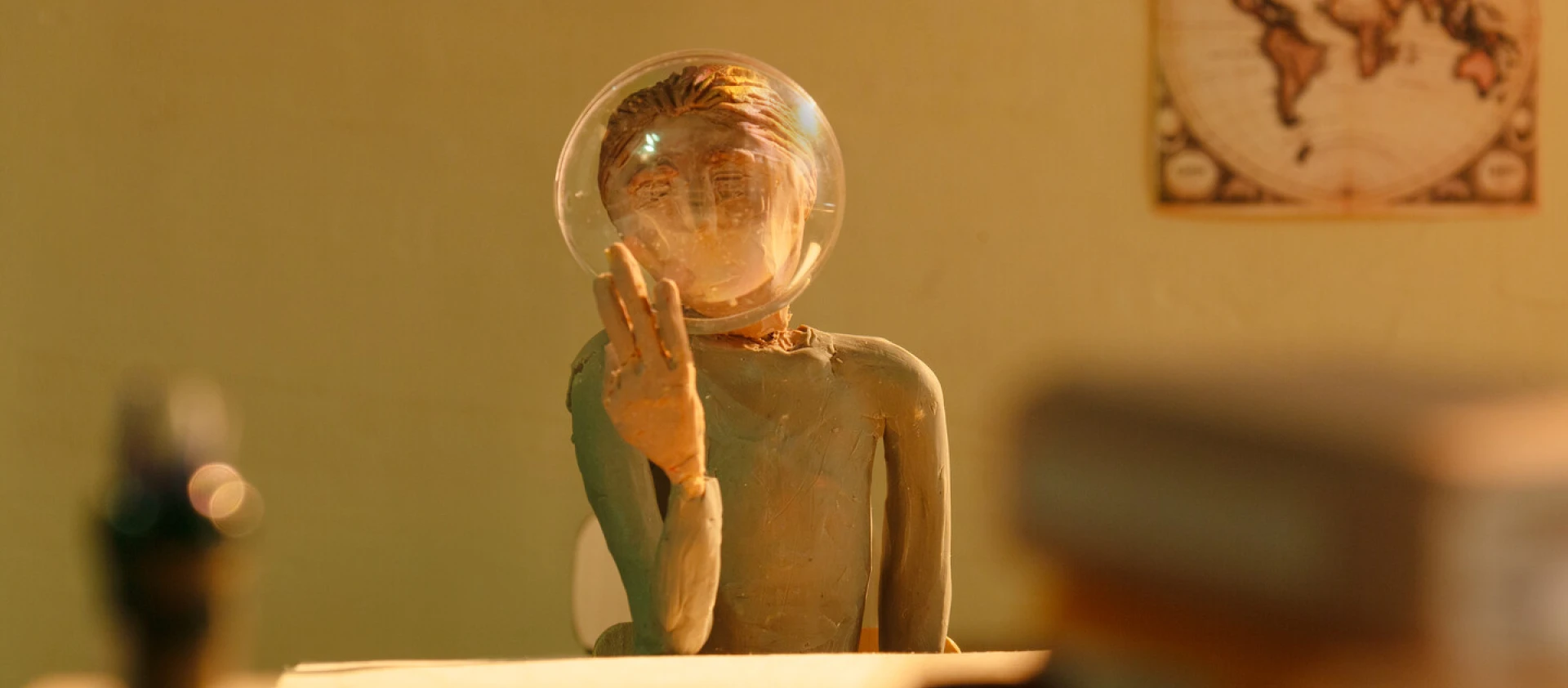
Evgenia Timova: And from a producer’s perspective, how did you manage all of that? I imagine you went through a lot of clay, and it must have been a challenge managing the character within the confines of that little aquarium-like bowl. What were the biggest technical hurdles?
Hasse Van Overbeke: One of the hardest things was dealing with reflections on the glass bowl. We were using a lot of practical lighting, and reflections were a big issue. But the bowl itself is actually fake—it’s built with rigs and placed in front of the character to create the illusion. So yes, spoiler alert, film is not real, it’s all an illusion! But Hasse managed it beautifully, and we made it work. I’m really proud of what we achieved.
Interviewer: Evgenia Timova
Editor: Martin Kudlac
Evgenia Evtimova’s Take
Belgian filmmaker Hasse Van Overbeke’s Canned, a six-minute stop-motion short produced as a master’s graduation project, is an intimate and allegorical portrayal of anorexia through the figure of Sam, a teenage boy who retreats into a glass bowl in response to bullying. Officially selected at MONSTRA and CRAFT animation festivals and recipient of the Junior Jury Award at Monstra, the film translates an intensely personal theme into a tactile and confined cinematic language.
From its opening frames, Canned establishes a claustrophobic world that never relents. Rendered in clay and filmed within a constructed aquarium environment, the film draws formal parallels to Sylvia Plath’s “bell jar” metaphor, a mental glass dome that both protects and suffocates. The film uses a 4:3 aspect ratio, further compressing the visual field, reinforcing the psychological constriction that governs Sam’s journey inward. Although the bowl is an illusion, a cleverly rigged construct rather than actual glass, its presence is persistent and overwhelming, a spatial metaphor for internalised trauma.
The film’s most striking element lies in its medium. Claymation proves especially resonant here. As producer Sam Scheunders notes, the choice to move from 2D to stop-motion was driven by clay’s elasticity, a body that is manipulable, reshaped, and ultimately deformed. The moment the protagonist begins to understand that he is, in fact, made of clay is not a metafictional break but a powerful visual metaphor: self-perception dissolving into something both surreal and painfully tactile. Every fingerprint, every imprecise edge becomes part of the narrative language, mirroring the fragility and distortion of body image in eating disorders.
Visually, the film avoids polish in favour of texture, rough surfaces, dim lighting, and a muted palette that leans into greys and sickly blues. There’s an intentional physicality to every frame. The camera remains tight and unforgiving, never pulling back far enough to offer relief. And yet, despite the oppressiveness of the mise-en-scène, there is a delicate choreography to the movement, carefully animated gestures, the slow drift of clay tears, and subtle shifts in posture that carry emotional weight without the need for heavy dialogue.
The story unfolds mostly in silence, punctuated by restrained sound design that resists melodrama. The absence of verbalisation is fitting. Canned is not an explanatory film but an atmospheric one. Influences like the short 2D animation Egg are evident, especially in the shared minimalism and psychological abstraction.
While brief, Canned achieves a density of meaning through its compression, both thematic and spatial. As a student film, it stands out not for technical flamboyance, but for control: over tone, over material, and over metaphor. That the film required 117 shooting days for six minutes of screen time speaks volumes to the rigour behind its softness.
Canned belongs to a growing wave of animated films that tackle mental health through embodied, sensory aesthetics. Its place in festival circuits focused on youth trauma, hybrid storytelling, and formal experimentation is well deserved. It is a contained work in every sense, and all the more impactful for it.


