


COLLECTABLE STORIES: AMEN

AMEN
Short Talk with Avril Zundel
BEST STUDENT ANIMATION category
22nd IN THE PALACE International Short Film Festival 2025
France, Animation, 00:06:46, 2025
Synopsis: A group of pigs are living peacefully in a monastery. One day one of them is taken out of the enclosure by a monk. He is brought to a dark room full of knives and meat, and he understands what fate awaits him: the monks are going to turn him into charcuterie. Like a hero, guided by a divine force, he manages to break free and makes a return to the enclosure to also free his friends. Thus starts a great escape throughout the monastery, will they be able to get to freedom?
Biography: A group of 6 students studying digital cinema at the École des Nouvelles Images. They came together to work on this graduation film after spending 5 years during their studies specialising in different areas of 3D.
 Orphee Coutier, Bettina Demarty, Kimie Maingonnat, Laurene Perego, Louise Poulain, Avril Zunder
Evgenia Evtimova: Avril, you have achieved a wonderfully charming film. I cannot start without asking the question, why pigs?
Avril Zundel: With this story, we wanted to show that anyone can be a hero. We knew from the beginning that we wanted it to be an animal. Why a pig? They are actually very intelligent but underrated creatures. During the process, we did extensive research on religious history, and we came across a saint who had a pig as a pet. So we thought it fit perfectly, it felt meant to be.

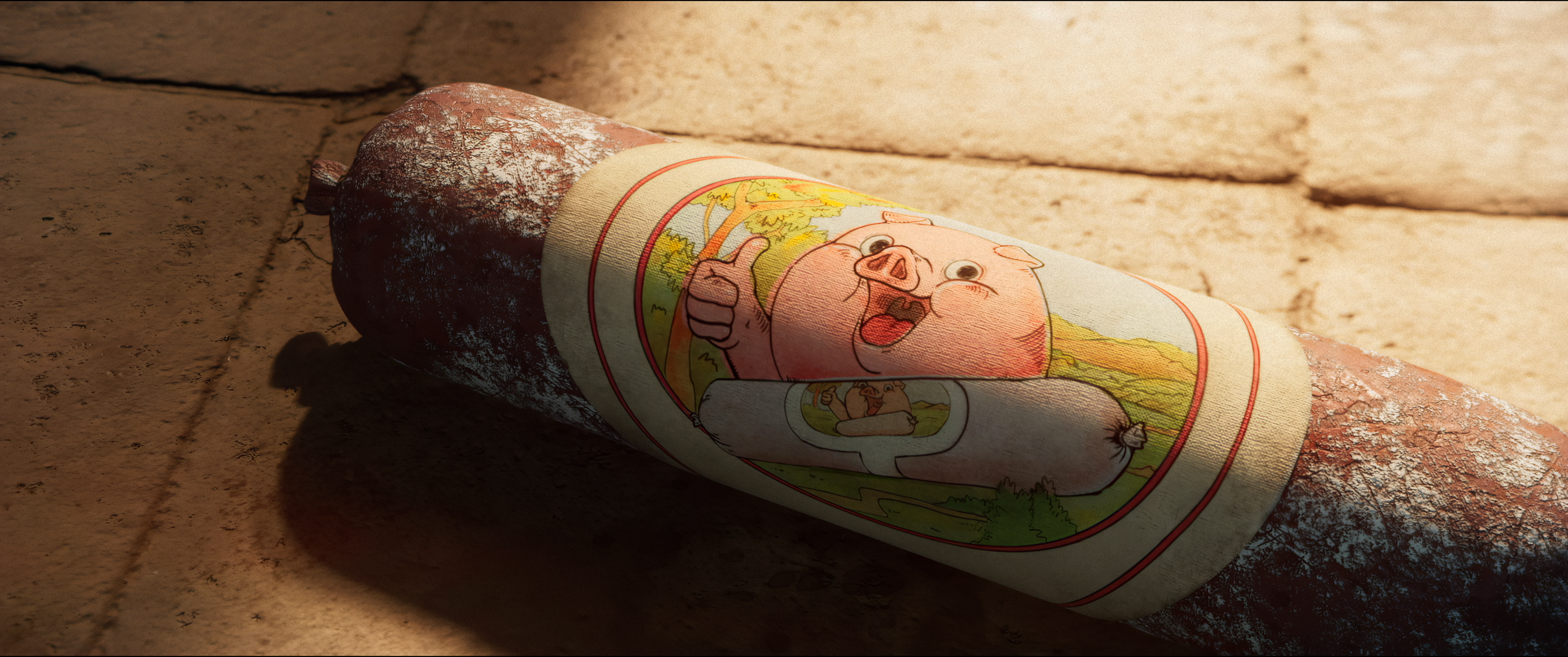
Evgenia Evtimova: The texture of the hair on the pig’s skin, or even the texture on the salami, really stands out in their detail. It probably took a lot of time and effort to perfect. How did you know it was just right?
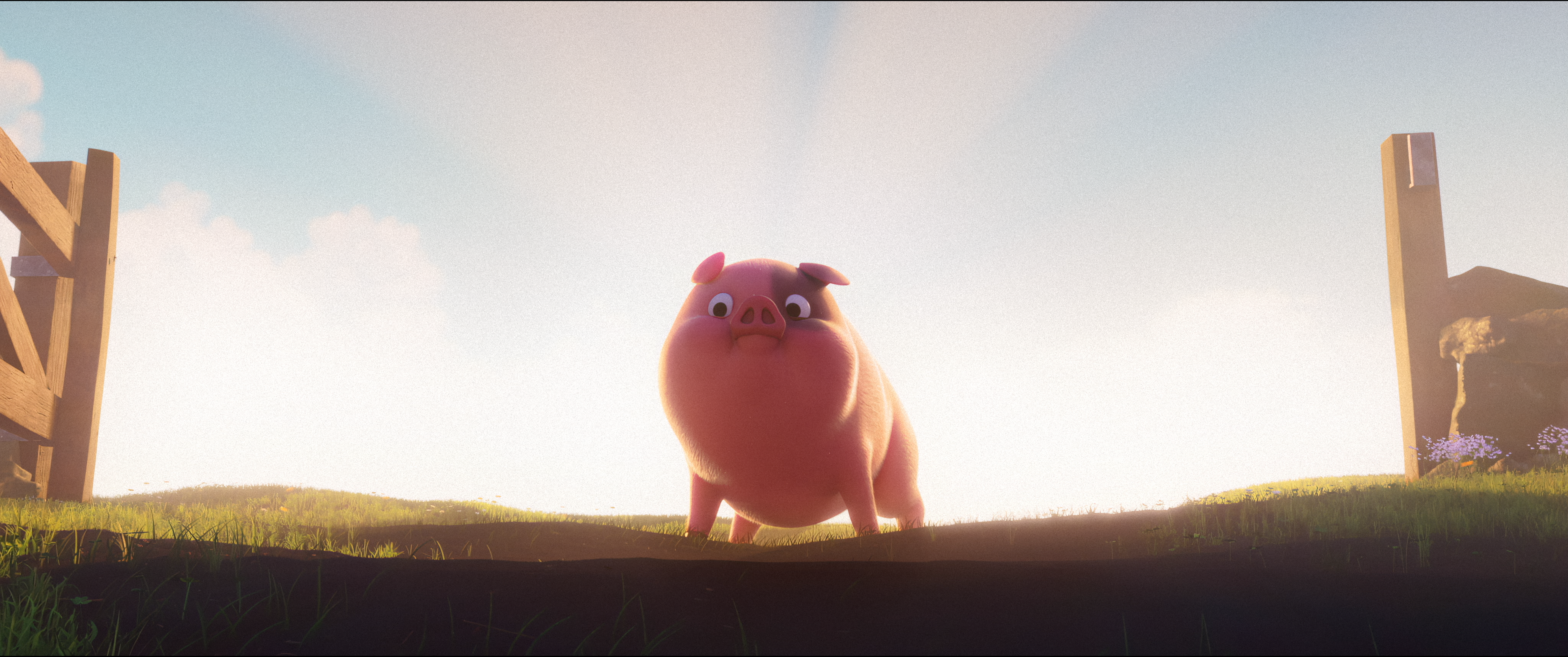
Avril Zundel: It was really hard to do. Our aim was to create a look for the film that was somewhat realistic but also cartoony, so people could empathise with it. That’s also why we made the pig round and very cute. For the render, we leaned more towards realism, which is why we added the hair on the pig. It made him even cuter.
Evgenia Evtimova: Another thing that stands out is the light. Was there a role that lighting played in the script, or was it something that developed later?
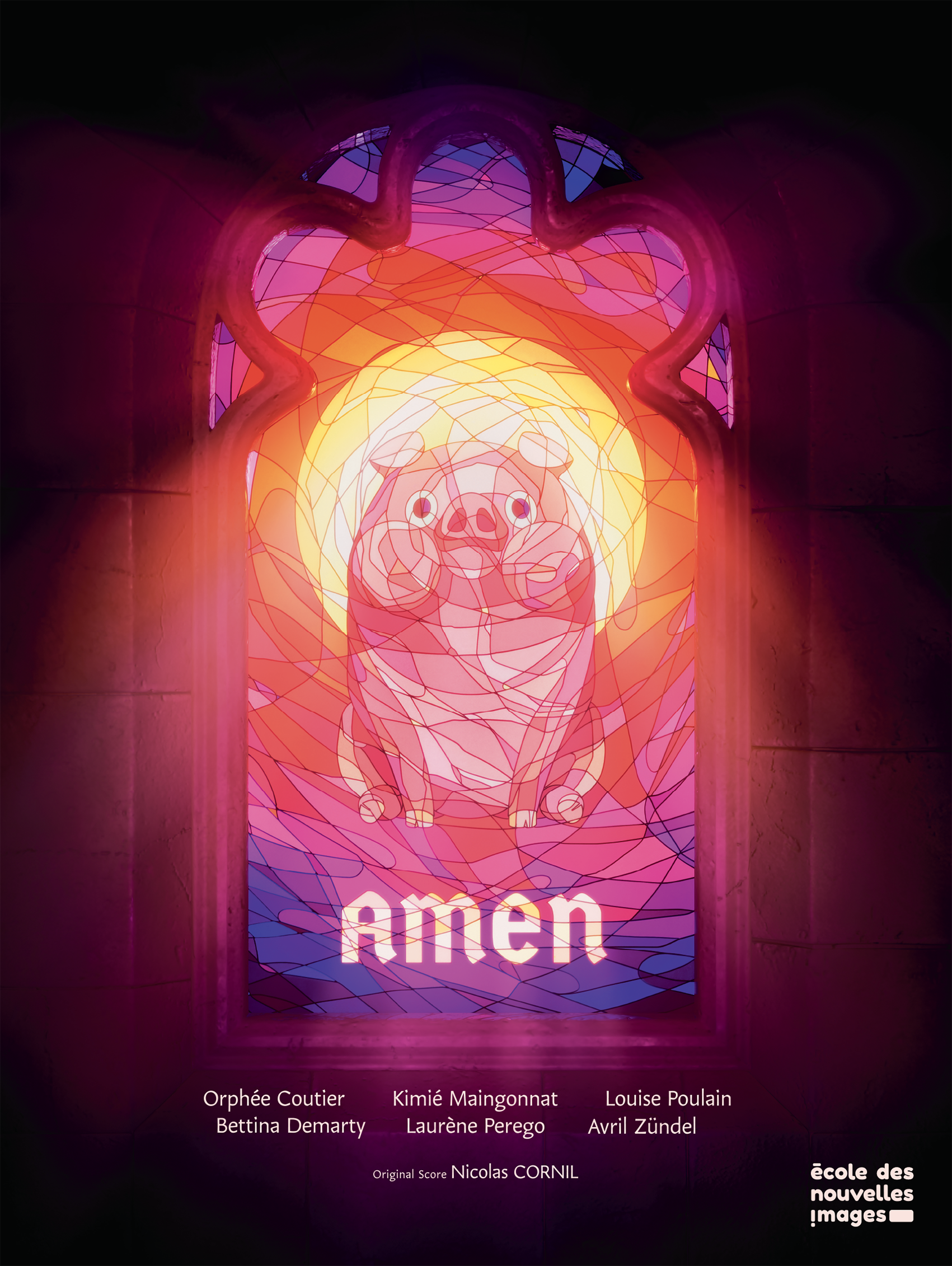
Avril Zundel: In animation, you have to make every image from scratch, nothing is left to chance. We wanted to make a very narrative-driven film, so it was important that every aspect contributed to the story and conveyed the emotions of the scenes. You can tell that in each sequence the lighting changes, for instance, the light is more neutral when everything is happy, and then it gradually darkens as the tone shifts. Of course, our hero is guided in some form by a divine presence, so we wanted to find a way to represent that. We looked a lot at the history of art and religious iconography, at how divine figures are portrayed. We found that golden light was often used to represent God or a higher power. That’s why, when the pig becomes a hero, he is surrounded by golden light. We wanted to bring in that religious reference.
Evgenia Evtimova: It really shows the colour of life and the nuance. Another thing is the humour, it is so subtle and carefully crafted. Was that a collaborative process or the idea of one person?
Avril Zundel: We wanted to tell an epic story, but it was very important that it didn’t feel too heavy. That’s why the incorporation of humour was key, the pig himself was a fun figure. It was all very intentional throughout, to make the film lighter and reach a wider audience.
Interviewer: Evgenia Evtimova
Editor: Martin Kudlac
Evgenia Evtimova’s Take
Premiering as part of a student showcase, Amen is a delightful and funny yet unsettling 3D animated short that combines childhood charm with mild existential horror, all in under seven minutes. Directed by Avril Zundel, the film draws its emotional power from contrast: a cozy, idyllic monastery inhabited by round, soft-edged pigs, disrupted by a slow realization about their fatal fate.
The choice to center the story around pigs, as Zundel explains, emerged both from research and metaphor. Traditionally misunderstood but intelligent animals, pigs are here both innocent and symbolic, rooted in medieval Christian iconography, where saints were often depicted with animal companions. This unlikely origin lends the film unexpected thematic depth: an allegory about awareness, freedom, and divine guidance.
The character design is deceptively simple. The pig protagonist, plump, peach-toned, and wide-eyed, evokes immediate empathy. But beneath the cartoonish exterior lies a striking attention to realism, most notably in surface textures. The subtle glint of light on fur, the glistening skin, and even the fibrous look of sliced salami are rendered with near-photorealistic detail. These hyper-real touches, especially on organic materials, ground the stylized visuals in a tactile world, amplifying the emotional and sensory stakes. It’s a careful calibration: cartoony enough to charm, detailed enough to bring you closer.
Lighting, too, is central to the film’s emotional arc and technical ambition. Every frame in a 3D animation must be constructed from scratch, and in Amen, lighting is as narrative as it is aesthetic. Warm, diffuse glows suggest comfort and routine early on; harsher, colder lights introduce doubt. By the final act, the visual palette has transformed. Drawing directly from religious art, the animators use golden, almost divine illumination to symbolize awakening and courage. This golden light isn’t just an aesthetic flourish, it mirrors classical depictions of sainthood and transcendence, embedding spiritual symbolism into the story’s emotional turning point.
The tonal shift in Amen, from playful to perilous, is handled with restraint and subtle humor. One of the short’s finest achievements is its comedic control. There’s no slapstick or winking irony. Instead, humor arises from timing, visual juxtaposition, and character expressiveness. It lightens the philosophical weight of the premise without undermining it. The humor was, according to Zundel, meticulously integrated throughout the process, both to soften the intensity of the story and to broaden its accessibility. It works: the film is rich in meaning without becoming didactic, charming without being cloying.
Behind the technical finesse lies a conceptual maturity uncommon in student work. Amen manages to evoke themes of captivity, free will, and divinity, all through the lens of a story about pigs in a monastery. It is visually confident, emotionally precise, and executed with a clarity of vision that hints at a promising directorial voice. The film’s length may be short, but its resonance is enduring. Amen joins a growing canon of animated parables that use stylization not to avoid complexity, but to reveal it.


