


COLLECTABLE STORIES: A TAREA

A TAREA
Short Talk with Iván Miguélez (composer)
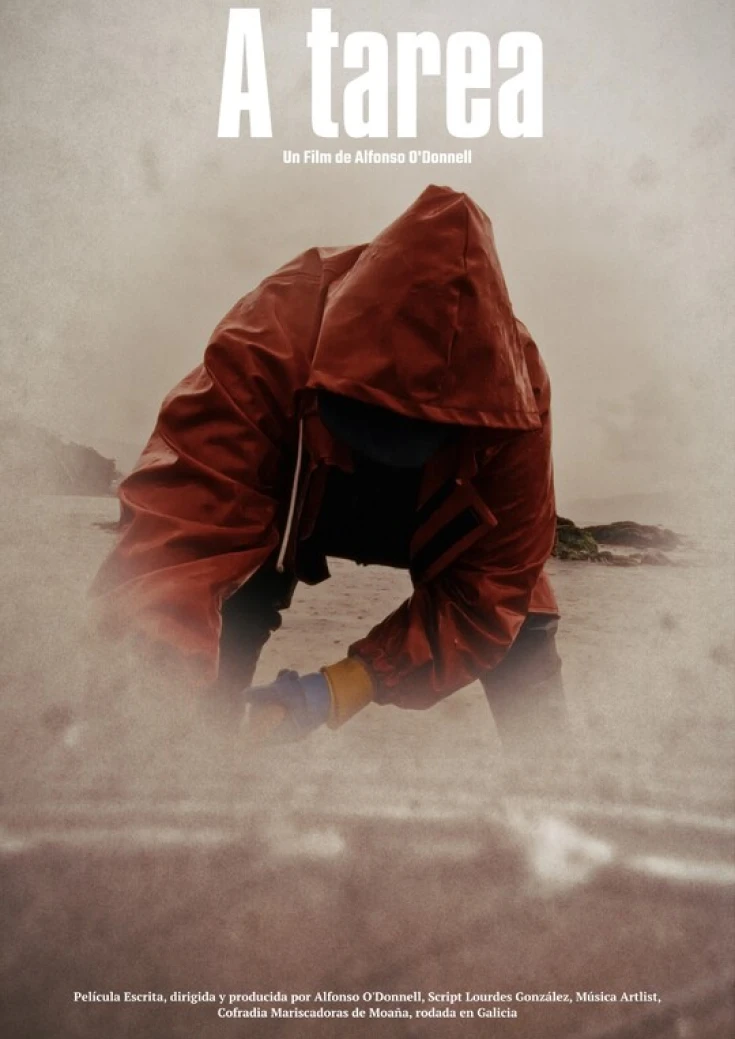
BEST SHORT DOCUMENTARY FILM Category
22nd IN THE PALACE International Short Film Festival 2025
Spain, Documentary, Galician, Spanish, 00:28:20, 2025
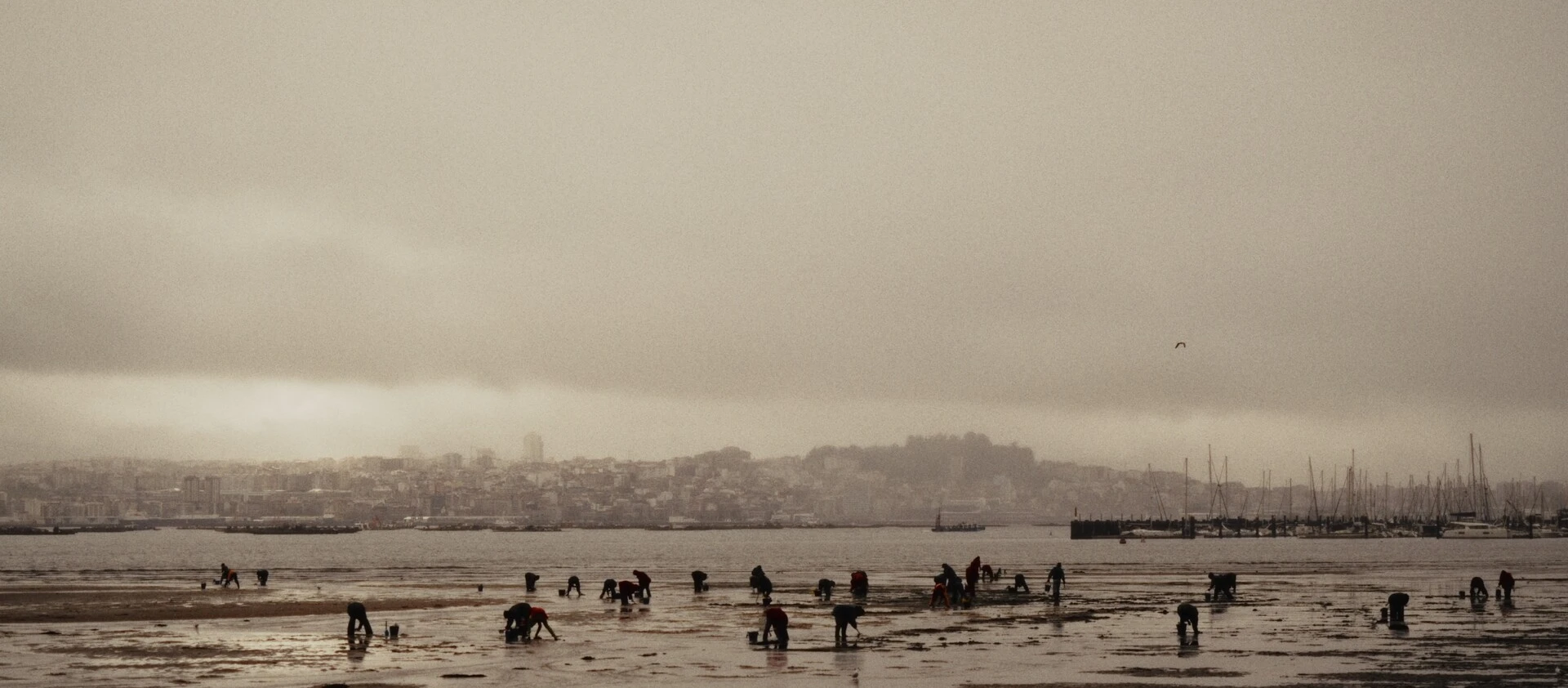
Synopsis: Poachers and climate change are wiping out the fine clam and the slimy clam in the Galician estuaries. A group of shellfish gatherers on foot fight to remedy this imbalance. A hard work whose tradition is extinguished with each generation.
Biography: Alfonso O'Donnell has been a director, editor and director of photography for over 14 years. He has extensive experience in the world of documentary filmmaking. In his career he has 49 nominations and 9 First Prizes in national and international festivals. His two most outstanding works are Viento de Atunes, winner of 3 National Awards and nominated for the Goya Awards as Best Documentary Short Film in its 2016 edition and Abuelo Fuego winner of 6 First Awards in 2019. After Es la vida documentary directed in 2023, touring the festival circuit, he is currently presenting his new documentary film A tarea.
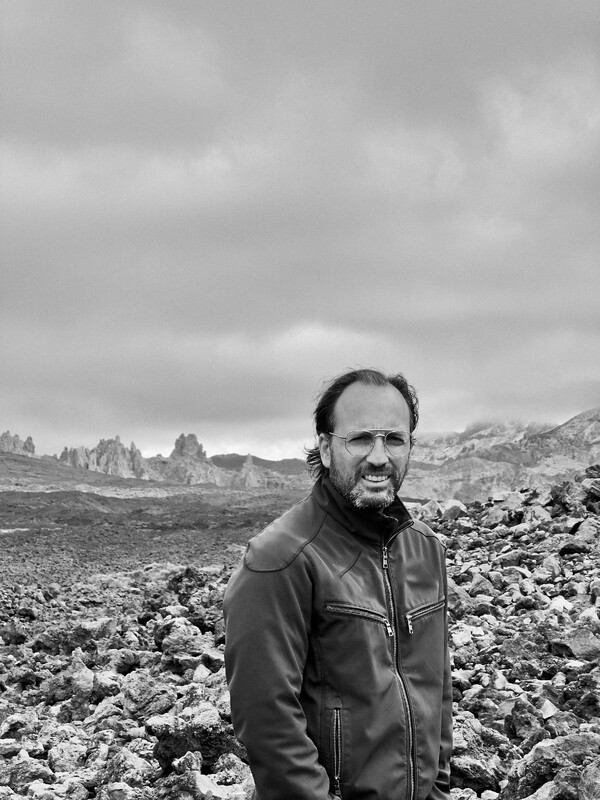 Alfonso O'Donnell, director
Evgenia Timova: This is a film about very physical, manual labor. We see these women working and struggling. From a composer’s perspective, how did you approach the music to complement what director Alfonso has done?
Alfonso O'Donnell: Mainly, I focused on capturing the feeling of what’s happening in the film, and more importantly, the emotional response we want from the audience. The goal is always to support what’s happening on screen, whether that’s creating tension, or simply helping the viewer feel what the characters are going through. My job is to help the film communicate that emotion.
Evgenia Timova: But it’s also important that the music doesn’t distract from the visuals. How did you strike that balance?
Alfonso O'Donnell: Yes, of course, it should never distract. At the same time, the music has to stay connected to the visuals at all times. For me, the most important thing is that the viewer isn’t thinking about the music, they’re simply in the film. Immersed. I try to write music that transmits the right emotion without pulling attention away from the story.
Evgenia Timova: What’s also impressive is that the director wore multiple hats, he was the director, producer, editor, writer… everything. It’s a very handmade, tactile piece of cinema. Did that influence how you approached the composition?
Alfonso O'Donnell: Yes, this kind of project has no real budget, so Alfonso, the director, had to do almost everything himself. And actually, I’ve worked with him for many years now. He does everything on the film, and I handle the music. We’ve developed a strong working relationship. Of course, we sometimes see things differently, but we always come to an agreement in the end. We’re very used to working together, and I’m very comfortable with him. It’s a good collaboration.
Evgenia Timova: In this collaboration, did the conversation about music begin before the film was shot, or only after?
Alfonso O'Donnell: It always starts after the film is done. Sometimes, during editing, Alfonso uses reference music and shares it with me. Then I either create something close to that, or go in a completely different direction, and hope he likes it. That’s when we start having deeper conversations. Sometimes I have to make corrections or changes if he has a different vision. And of course, he’s the director, so I follow his lead.
Evgenia Timova: That’s the key, right? The collaboration between director and composer. Because in a way, you’re the director of the emotional and musical tone of the film.
Alfonso O'Donnell: Yes, exactly.
Interviewer: Evgenia Timova
Editor: Martin Kudlac
Evgenia Evtimova’s Take
Tides shift, but some rhythms persist. A Tarea finds its pulse in the mudflats of Galicia, where a group of shellfish gatherers, all women, all aging, wade through an increasingly hostile environment, collecting clams by hand as the tides of climate change and poaching erode both their yield and their legacy. What begins as an observational short documentary expands into something broader and more meditative: a reflection on labor, time, and the quiet erosion of tradition.
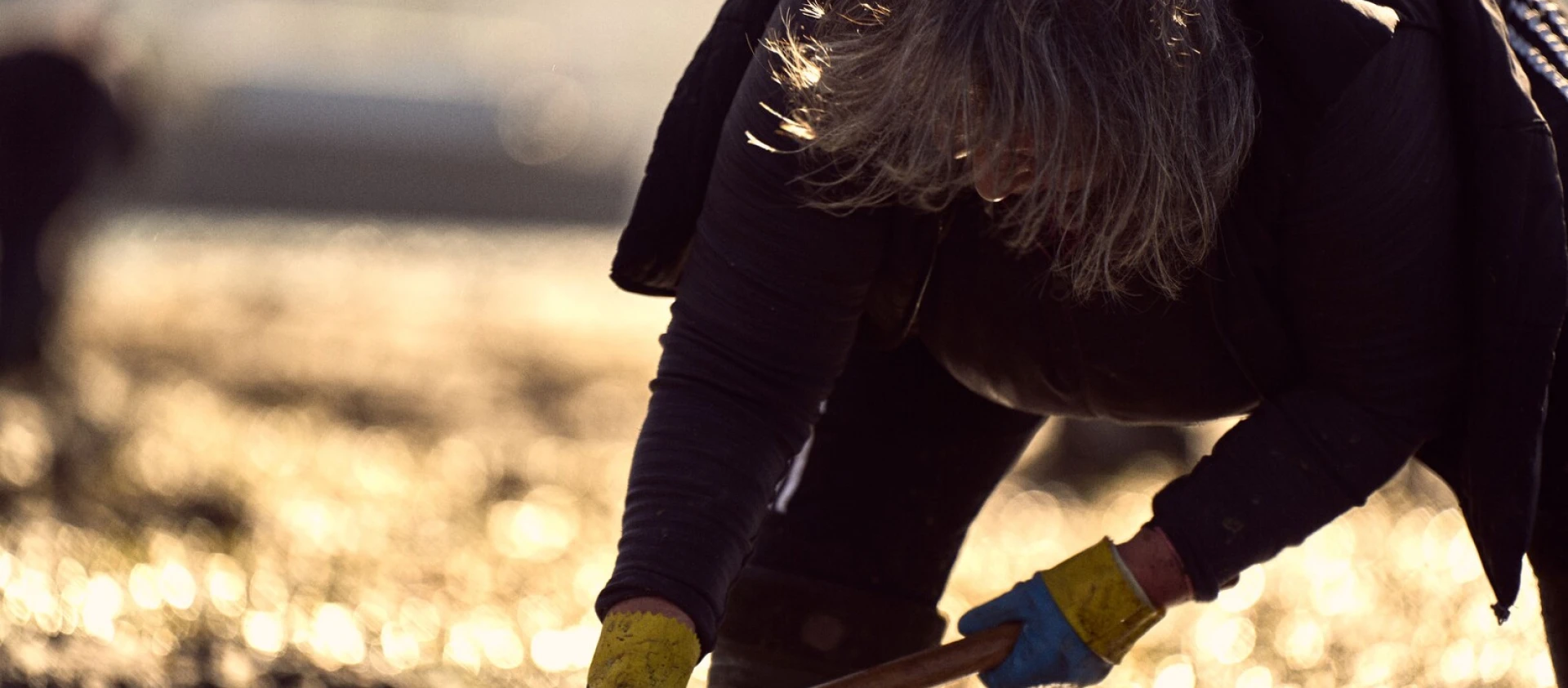
Director Alfonso O’Donnell wears several hats. Working as editor, camera operator, and director, he opts for proximity over commentary. His camera is never in the way. There are no talking heads, no sweeping score. Just the scrape of tools in the sand, the women’s quiet chatter, and the distant churn of a dying ecosystem. It’s a vérité approach, but it’s not raw. It’s composed, aware of framing, rhythm, and weight. These women are not romanticized. They are tired, focused, persistent. And yet the film gives them space, space to speak, to dig, to exist on their own terms.
What elevates A Tarea beyond standard observational fare is the way its invisible elements cohere, the edit, the sound design, and particularly Iván Miguélez’s music. The score doesn't lead, it listens. Miguélez approaches the film like a tide itself, his music receding and returning in sparse, textured waves. He understands that in a film about physical, repetitive labor, rhythm is everything. The music is not melody-driven, it’s tactile, as if composed from the ambient thud of boots on wet sand or the distant metal scrape of a rake through estuarial silt.
The collaboration between O'Donnell and Miguélez feels intuitive, shaped over years. There’s a quiet understanding that the music must never overwhelm the image, instead, it acts as emotional reinforcement, often felt more in absence than presence. It’s a score that respects labor, not dramatizing it, not aestheticizing it, but absorbing its tempo and staying with it.
Visually, the film resists spectacle. No drone shots. No sweeping coastlines. The image stays low, often near the mud, always with the women. The color palette is earth and sea, rusted buckets, gray skies, brown skin, pale clams. You can feel the chill. The grime gets under your nails.
What lingers after the film ends is not a sense of nostalgia, but inevitability. These women are not making a living, they are prolonging a way of life. One that, as the film suggests without forcing the point, is slipping away. A Tarea is not a eulogy, but it edges close. Its final moments, stripped of music, full of fatigue, feel like a tide going out, leaving behind something small and hard-earned in its wake.


